
AI Data Center Growth is Accelerating – Is Safety Keeping Up?
by Mandy Marxen
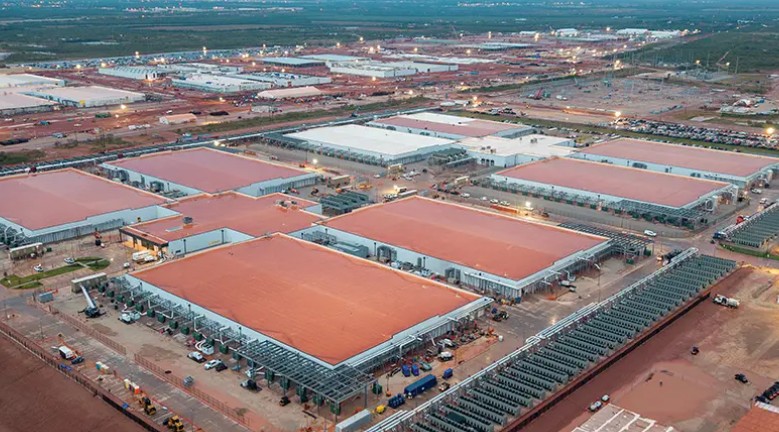
The rapid expansion of artificial intelligence is transforming more than just software—it’s reshaping the physical world. Across the U.S. and globally, a surge in AI-driven data center construction is underway, creating what many experts are calling one of the largest infrastructure buildouts in history.
In a recent NFPA interview, it was stated that in 2025 alone, U.S. companies spent an estimated $600 billion to build new data centers—twice the cost of the entire U.S. interstate highway system.
But with this growth comes a critical question: is safety evolving fast enough to keep pace?
A New Kind of Infrastructure Challenge
The NFPA article stated that more than 2,000 data centers will be built around the globe by 2030. These are not just construction projects. AI data centers are fundamentally different from traditional commercial building projects due to the infrastructure they demand. They require significantly more power, generate far more heat, and rely on increasingly complex systems to operate. In many cases, these facilities are being designed and built while the underlying technology is still rapidly evolving and regulations are struggling to keep pace.
This creates a unique challenge for safety professionals, engineers, and Authorities Having Jurisdiction (AHJs), who are tasked with evaluating risks that don’t yet have well-established standards or precedents. As one expert noted in NFPA’s recent coverage, the industry is still “scratching the surface” of understanding these systems.
Where Safety Risks Are Emerging
Several key risk areas are drawing increased attention:
- Energy demand and power infrastructure: Some modern data centers now operate at a scale comparable to entire cities.
- Heat generation and cooling systems: Advanced cooling methods introduce new operational and failure risks.
- Lithium-ion backup systems: Widely used for redundancy, but associated with fire hazards and evolving code considerations.
- Lagging safety standards: Technology is advancing faster than codes and best practices can adapt.
For EHS professionals, this convergence of scale, speed, and uncertainty is not theoretical—it’s already influencing how facilities are designed, approved, and managed.
MORE LITHIUM BATTERY SAFETY READING:
How To Safely Store Lithium Ion Batteries: Best Practices & Regulations
Why This Matters for Safety Leaders
At its core, the AI data center boom highlights a broader truth: innovation often outpaces regulation. When that happens, safety depends on proactive awareness, cross-industry collaboration, and adherence to evolving guidance from trusted organizations.
That’s why staying informed through organizations like the National Fire Protection Association (NFPA) is essential. Their work continues to play a critical role in identifying emerging risks, informing code development, and supporting safer outcomes across industries.
Our Perspective
At U.S. Chemical Storage, we closely monitor developments like these because they directly reflect the environments our customers operate in—complex, high-risk, and constantly evolving.
While data centers may not be traditional chemical customers, the underlying principles remain the same: understand the hazard, design for compliance, and prioritize safety from the outset. A hazmat storage building is still necessary at these sites to segregate the flammable liquids used as fuels, lubricants, degreasers, and waste produced at these massive sites. Mulit-room structures can safety achieve this.
Additionally, fire-rated hazmat structures can be utilized as ‘drop over’ equipment buildings for safety and security of outdoor generators, and equipment buildings can contain the risks of specialty equipment.
Read the Full NFPA Article
For a deeper, expert-driven look at how AI infrastructure is reshaping safety considerations, we highly recommend reading NFPA’s full article:
Additional Resources:
NFPA 855, Standard for the Installation of Stationary Energy Storage Systems (2026): https://www.nfpa.org/product/nfpa-855-standard/p0855code
- US Chemical Storage: Code Update – What Is New in NFPA 855 (2026) over (2023) https://www.uschemicalstorage.com