
US CHEMICAL STORAGE SOLUTIONS FOR THE
AEROSPACE & AIRCRAFT INDUSTRY
From aircraft manufacturing and maintenance, to space exploration and defense applications, the safe management of aerospace chemical storage is crucial to ensuring product quality, regulatory compliance, and the safety of both workers and the environment. For leadership teams evaluating aerospace storage solutions, the right facility design can reduce risk, improve workflow, and support long-term growth.
With a portfolio that spans aerosapce manfacturers, defense contractors, research institutions, and aircraft maintenance facilities, US Chemical Storage has the expertise to meet the industry’s stringent requirements. We understand that aircraft storage facilities and aerospace operations often require a compbination of safety engineering, code alignment, and practical layout planning.
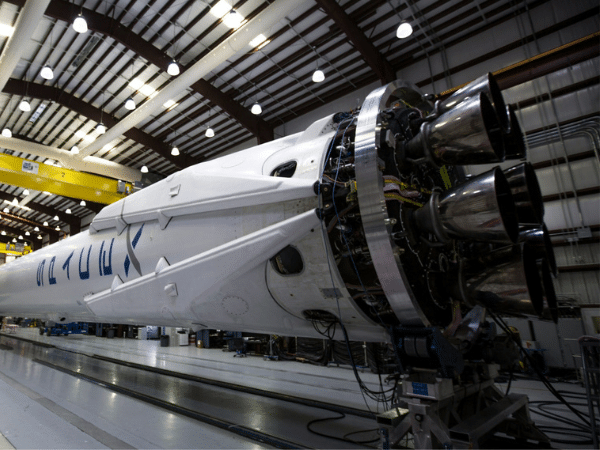
The aerospace and aircraft industry is one of the most technically demanding sectors in the world, with stringent standards for storing and handling chemicals and hazardous materials. Whether it is spacecraft, aircraft, UAV, or components for defense, this industry is vital to the economy.
Effective aerospace storage for chemicals is not just about keeping adequate supplies on hand; it is about protecting highly-skilled employees, expensive product integrity, and tight production schedules.
Industrial Aerospace Storage Solutions with US Chemical Storage
FLAMMABLES
CORROSIVES
WASTE
COATINGS
BATTERIES
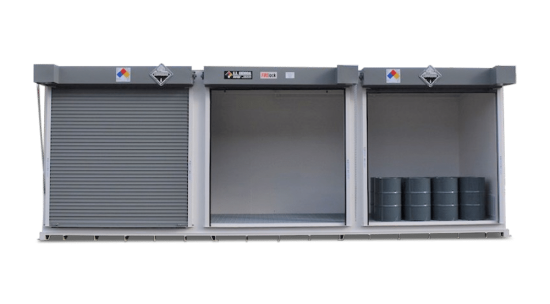
Protect mission-critical aerospace chemicals,
feedstocks, and hazardous waste
with engineered storage that integrates
fire protection, containment, ventilation,
segregation, and environmental compliance.

AEROSPACE PROJECTS IN ACTION:
We Can Make Compliance Simpler for Your Team
- NDAs – At U.S. Chemical Storage, we are proud to work with the innovators of this industry who are changing the world and our future. We fully understand that non-disclosure agreements are common and necessary.
- Security – It’s essential to this sector, and having a pre-fabricated building solution means a significantly reduced time for crews on site when compared to a traditionally constructed building.
- Safety Excellence – Due to the intense focus on safety for the industry, Aerospace facilities have strict protocols and comprehensive emergency response plans for dealing with chemical spills, fires, and other hazardous material incidents. Prefabricated Chemical Storage Buildings like those from U.S. Chemical Storage can accelerate emergency response time and mitigate the damage should a fire even occur.
- CapEx Approval Information – Assisting with budget planning and project justification for capital expenditures.
- GA Drawing Revisions – Customizing general arrangement designs to meet specific client requirements.
- State Permitting – Navigating compliance with local, federal, and international regulations.
- Stamped Plans – Providing certified engineering documentation for construction and regulatory approval.
- Transportation Coordination – Managing logistics for the safe delivery of storage units to your facility
WHY AEROSPACE STORAGE COMPLIANCE MATTERS
Aerospace storage is shaped by overlapping rules from fire codes, environmental standards, workplace safety requirements, and local enforcement authorities. For facilities handling flammable liquids, combustible materials, gases, or waste streams, compliance is often influenced by NFPA 30, FNPA1, NFPA 400, EPA 40, OSHA, and our local Authority Having Jurisdiction.
That means aerospace and aviation hazmat storage solutions must account not only for the product being stored, but also for where it is stored, how it is ventilated, how it is accessed, and whether it is located indoors or outdoors. Never underestimate the permitting burden and inspection review process, which can delay projects if the storage design is not engineered correctly from the start. In large-scale facility construction projects, any part of the project that can be built concurrently and shipped in complete could save weeks of valuable time.
US Chemical helps simplify this process by designing aerospace hazmat storage solutions that are built around code awareness, engineered with the features required for safety and security, and with compliance readiness and documentation.
DESIGNING for SAFE AEROSPACE COMPONENT STORAGE
Aerospace component storage for hazmat and chemicals should support both protection and productivity. High value parts, sensitive assemblies, and specialized materials often require more than a standard rack, cabinet, or shed arrangement.
Common Chemicals and Hazmat Materials in Aerospace Storage commonly include:
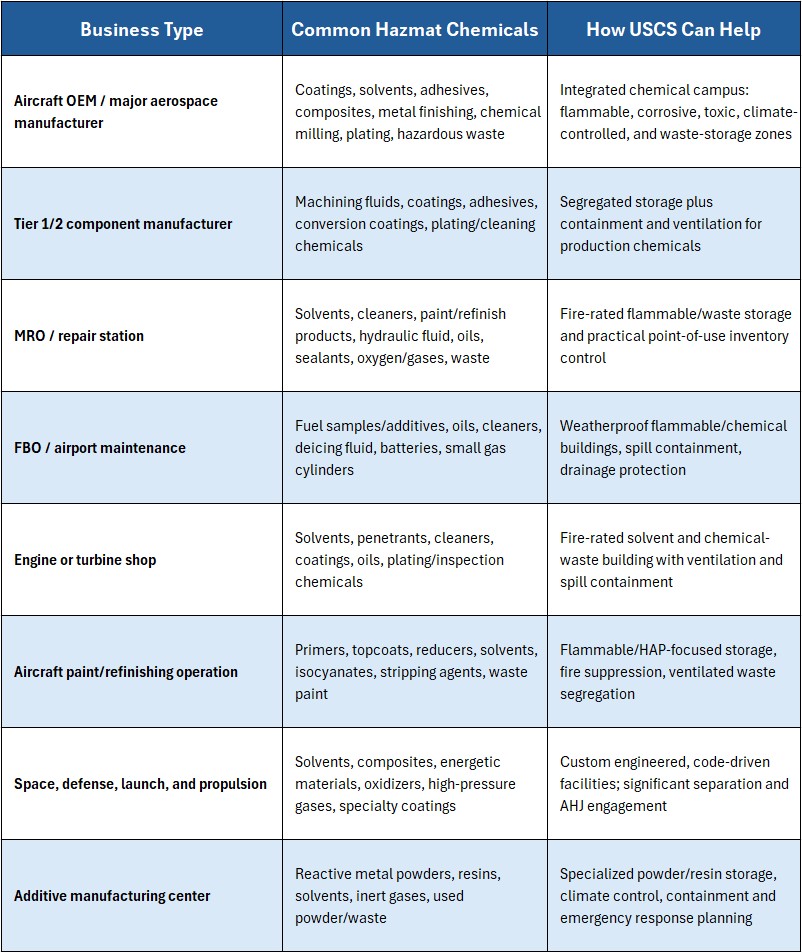
LAYOUT AND WORKFLOW CONSIDERATIONS
Facilities that store aircraft components, coatings, adhesives, or maintenance supplies often need a blend of rack systems, controlled-access zones, and dedicated hazardous storage areas. The best aerospace storage solutions align with the movement of people, materials, and maintenance workflows instead of forcing operations to work around the storage.
ENGINEERING EXPERTISE FOR THE AEROSPACE & AIRCRAFT INDUSTRY
- Acetone
- Methyl Ethyl Ketone (MEK)
- Hydrochloric Acid
- Alodine
- Oxygen Gas
- Isocyanates
- Fuels / Additives / Oils
- Liquid Hydrogen
Zinc Chromate
Polyethylene Glycol
Polyurethanes
Argon
Nitrogen
Reactive Powders
Composites / Resins
Lithium-Ion Batteries
ENGINEERING EXPERTISE FOR THE AEROSPACE & AIRCRAFT INDUSTRY
Flammable Chemical Storage
Controlled Environment Rooms
Explosion-Proof Storage Units
Fuel & Lubricant Storage
Paint, Coatings, and Varnishes
Electroplating & Heat Treatment
3D Printing Rooms
Custom Laboratories
Dispensing & Mixing Rooms
“Your suggestions, ideas, and help allowed us to arrive at three buildings that are working very well for us. Not only have the U.S. Chemical Storage buildings relieved some of the floor space in our facility but it allowed us to organize the systems we installed in the new storage buildings in a very orderly manner that meets the local codes and allows for easy deliveries as well.”
Charlie A. - Senior Process Specialist

LEARNING RESOURCES
ARTICLES
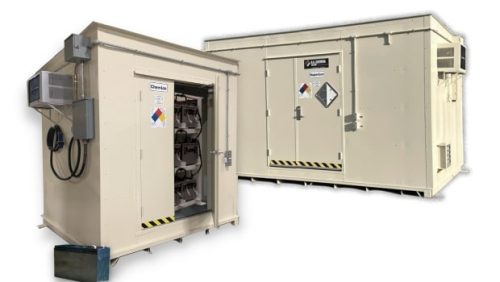
How To Store Lithium Batteries
While codes struggle to catch up to their proliferation, U.S. Chemical Storage sees lithium-ion batteries as just one more hazardous material we can contain. With nearly a decade…
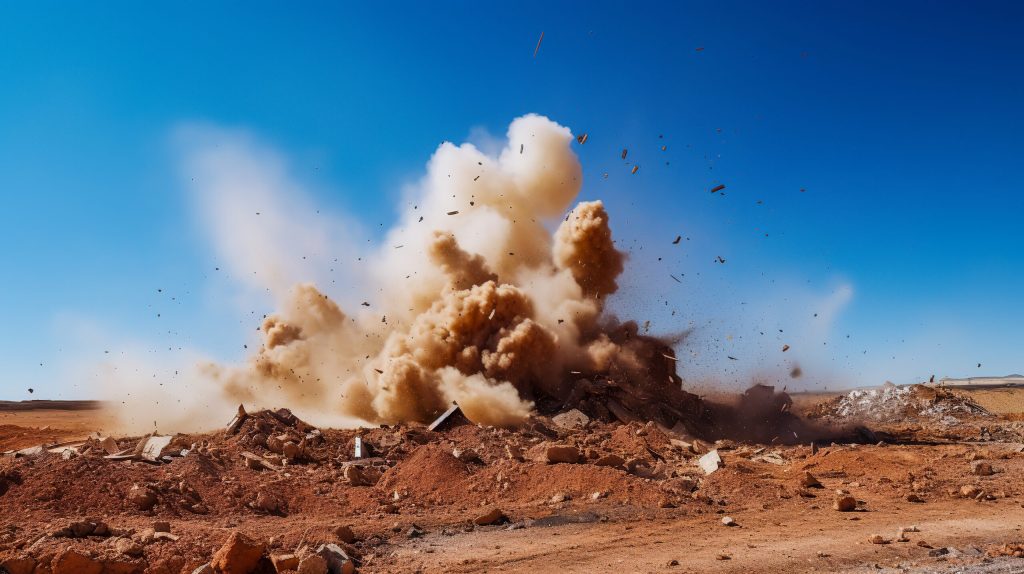
Explosive Storage Magazines
To help assure the proper handling and safety procedures when using high and low explosives, the federal government requires the use of magazines for storing all classes of…
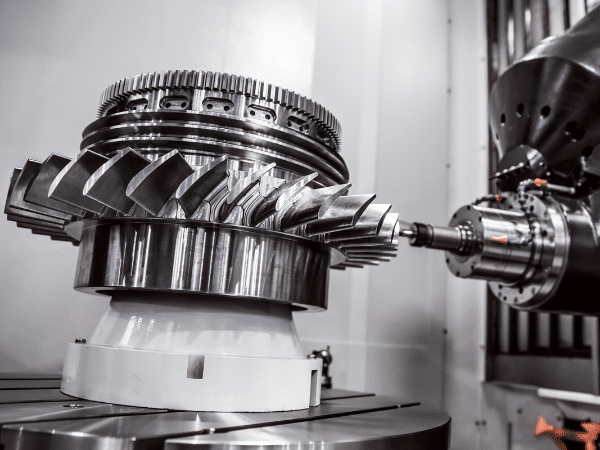
Powdered Metals Storage
Metal powders must be handled with extreme care due to the hazards associated with these products and their risk of contamination. Flammable and combustible materials…
Our Signature Products
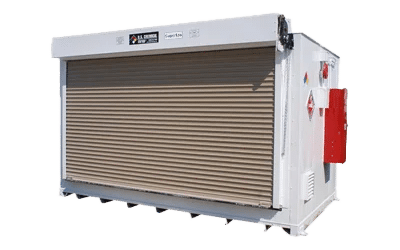
FIRE-RATED BUILDINGS
Fire-rated hazmat storage buildings safely manage risks when storing the most dangerous flammable and hazardous chemicals. With 2-hour or 4-hour construction available, they can offer all the protection required.
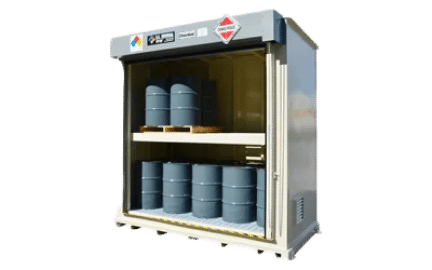
NON-FIRE RATED BUILDINGS
All U.S. Chemical Storage non-fire rated hazmat buildings are perfect when the chemicals don’t require a fire rating, or you have space to distance the hazards from your people and property.
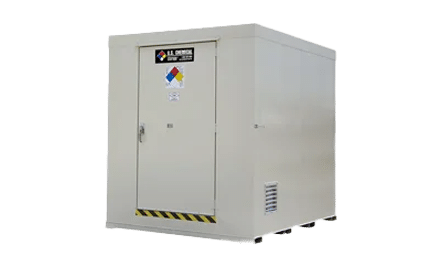
CHEMICAL LOCKERS
U.S. Chemical Storage engineers outdoor storage lockers with sumps to provide a quick, safe, and compliant solution to drum storage for 2 drums – to 16 drums.
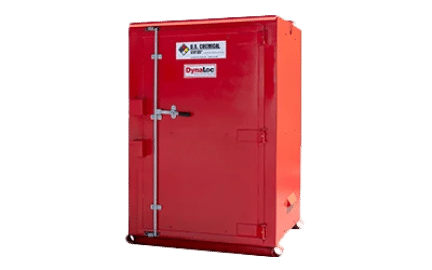
EXPLOSIVE MAGAZINES
When dealing with explosives, magazines are essential for ATF regulations. We offer a wide variety of Type 2, Type 3, and Type 4 explosive magazine storage solutions to prevent disasters and avoid fines. Custom builds available.
Frequently Asked Questions
Make sure to pull the product SDS from the manufacturer. It will tell you key information to properly asses the needs for your chemical. Ventilation, temperature control, incompativilities, fire suppression and handling information is all within that document. Next, know the MAQs (maximum allowable quantities, container types, waste streams, indoor or outdoor location, and site specific AHJ and insurance underwriters all factor into the full chemical-storage assessment.
WE ARE HERE FOR YOU
NEED MORE INFORMATION?