
US CHEMICAL STORAGE SOLUTIONS FOR THE
PLANT-TOUCHING INDUSTRY
Plant-touching operations operate under intense scrutiny—from fire marshals to local AHJs—and for good reason. Extraction processes, solvent storage, and processing environments introduce significant risks, including fire, explosion, and hazardous material exposure.
At the same time, operators must scale quickly, adapt to changing regulations, and maintain strict compliance to remain licensed.
U.S. Chemical Storage provides prefabricated hazmat buildings engineered specifically for these challenges—so your facility is inspection-ready from day one.

From extraction labs to processing facilities, US Chemical Storage delivers fire-rated, code-compliant buildings engineered to protect your people, your product, and your license
Purpose-built storage systems designed to support high-growth, highly regulated production environments—where compliance, safety, and scalability are non-negotiable.
Chemical Storage Solutions
for Regulated Plant Operations
US Chemical Storage can provide code compliant and audit-friendly storage solutions that achieve the utmost of safety while becoming an important part of your day-to-day material handling flow.
These areas can include:
- > extraction areas
- > food production areas
- > beverage production areas
- > pesticide and fertilizer storage
- > testing laboratories
- > storage areas for production chemicals
- > storage areas for cleaning chemicals
- > maintenance sheds with fuels and lubricants
- > fleet garages with fuels and lubricants
- > packaging areas with adhesives and inks
- > water treatment facilities, and more

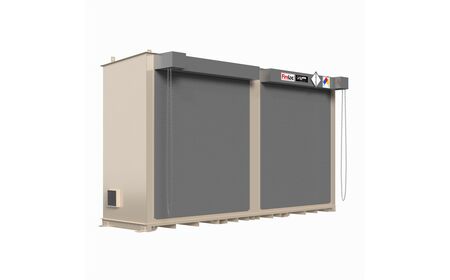
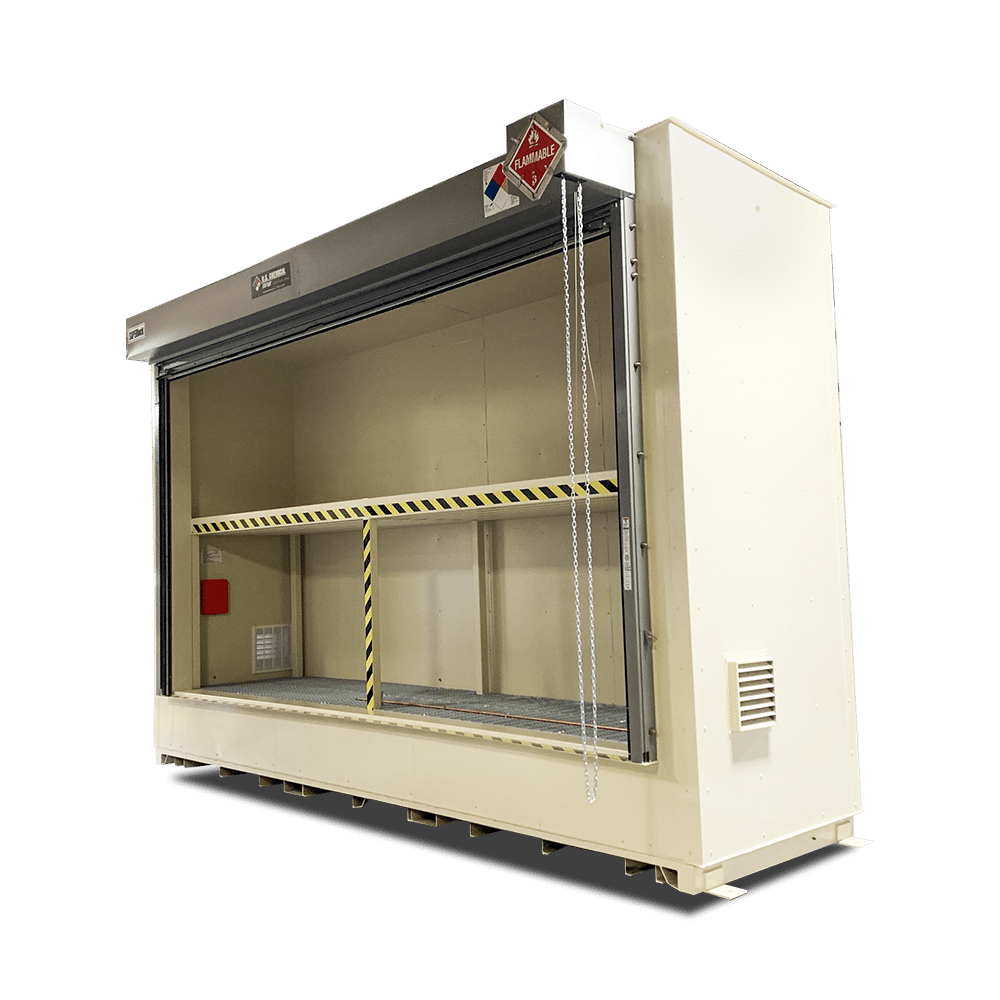
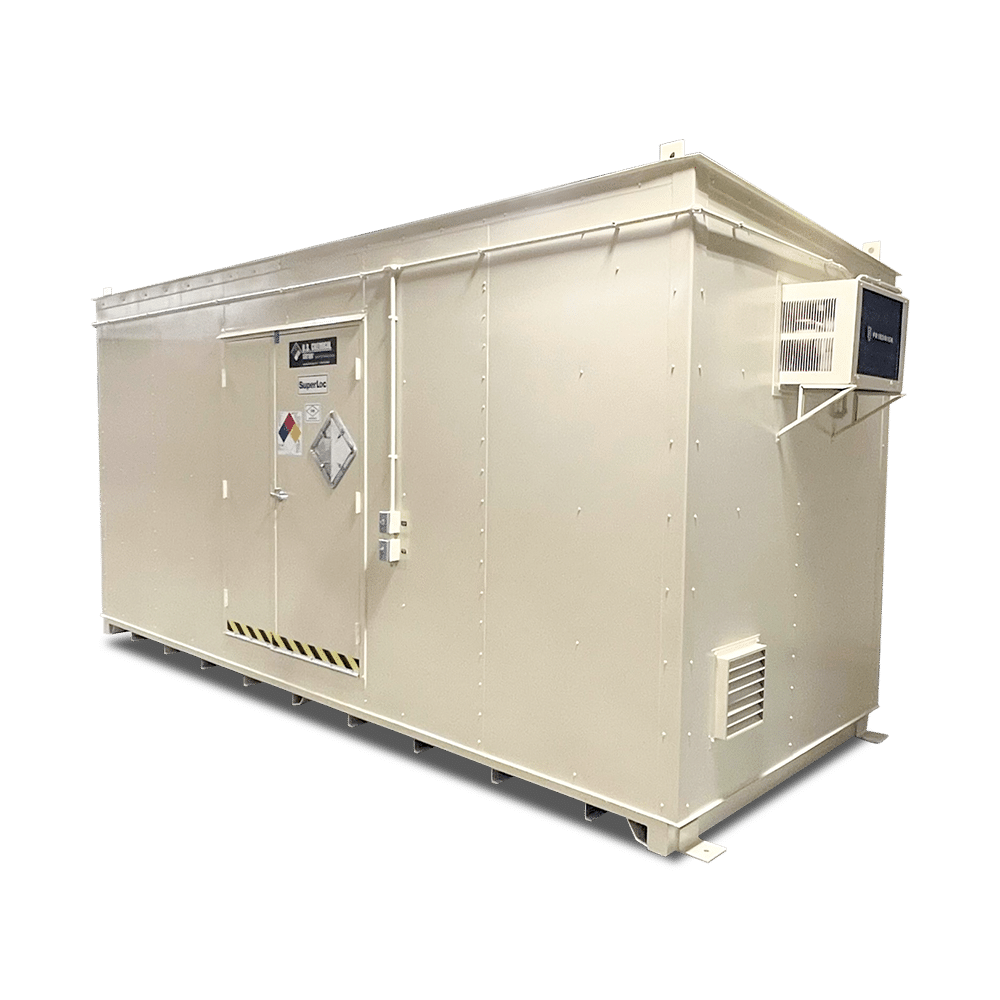
The Stakes Are High
Facility leaders need chemical storage containers and buildings that handle temperature-sensitive ingredients, preservatives, acids, and gases while maintaining strict chain-of-custody documentation.
Whether you’re cultivating, extracting, or manufacturing finished goods, your operation involves flammable solvents. pressurized gas, and hazmat waste that requires security and documentation, and strict fire code compliance tied to occupancy classifications.
- Fire and Explosion Risk - increases significantly when flammable liquids are improperly stored
- Regulatory Oversight - is constant from a variety of regulatory bodies
- Operational Shutdowns - can result form non-compliance or failed inspections
- Insurance and Liability Costs - rise when hazards are not properly mitigated
Chemical storage buildings are specifically designed to greatly reduce risks by isolating hazardous materials and preventing incidents before they occur. They can include a wide variety of safety equipment customized for your specific requirements. We provide 35 years of experience and a solid company profile.
These structures are fully fabricated at the US Chemical Storage facility, are configured to comply to DOT regulations so they can ship on a flatbed trailer, and are “plug and play” when the arrive at your site with only required activation for electrical, fire suppression, and water hookups if included in your building.
Inspections and enforcement are trending up in this sector due to elevated hazard profiles. New Local Emphasis Programs launched in 2024 specifically target this industry. Inspection frequency is no longer reactive. It is proactive and targeted.
US Chemical Storage can provide you with a storage solution with risk mitigation and code compliance while also enabling insurability.
- Fire-rated construction for solvents, CO2, and flammable cleaners
- Seamless integration with your existing processing workflow
- Precise temperature and humidity control for ideal chemical stability
- Segregated storage for hazardous chemicals vs. food-grade materials
Growth is outpacing safety infrastructure in many facilities. Growth isn’t just about opportunity—it reflects increasing recognition of operational risk and the need for formal risk management.
Injury Rates Are Rising
OSHA data shows increases in common incidents like chemical burns, respiratory issues, and solvent exposure injuries.
US $1.2 Billion Insurance Market
Carriers continue to restrict coverage or increase premiums due to safety concerns.
$165,000 Max Penalty per Violation
Multiple violations during a single OSHA inspection can quickly escalate into six-figure fines and up.
EASILY ADDRESSING INFUSED PRODUCTS
This sector faces the strict controls of the Food and Beverage industry, the Cosmetics industry, the Supplements and Nutrition Industry, in addition to the financial and business regulations that are changing every day. We address those too, with our 35 years of experience in all of those industries.
Temperature Control for Perishables
Edible and beverage sectors continue to grow and demand specialized buildings with consistent temperatures. Any fluctuations compromise shelf life and trigger microbial growth.
Chemical Segregation and Safety
Solvents, acids (citric, acetic), bases (sodium hydroxide), and gases (CO2, nitrogen) require dedicated food storage containers separate from finished goods. FM-approved cabinets and rooms prevent leaks or reactions that could contaminate production areas.
Humidity and Clean Room Standards
Oils, tinctures, cosmetics, and other wellness products need strict climate control featres to avoid clumping or degradation. Class 100 clean rooms protect sterile additives and reagents.
Traceability and Regulatory Documentation
2026 FSMA 204 rules mandate lot-level tracking for high-risk foods. Our storage solutions include built-in racking, labeling systems, and digital logging interfaces that simplify compliance reporting.
OUR SOLUTIONS for PLANT-TOUCHING FACILITIES
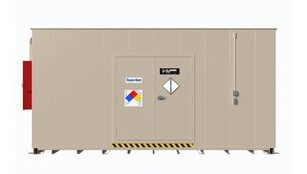
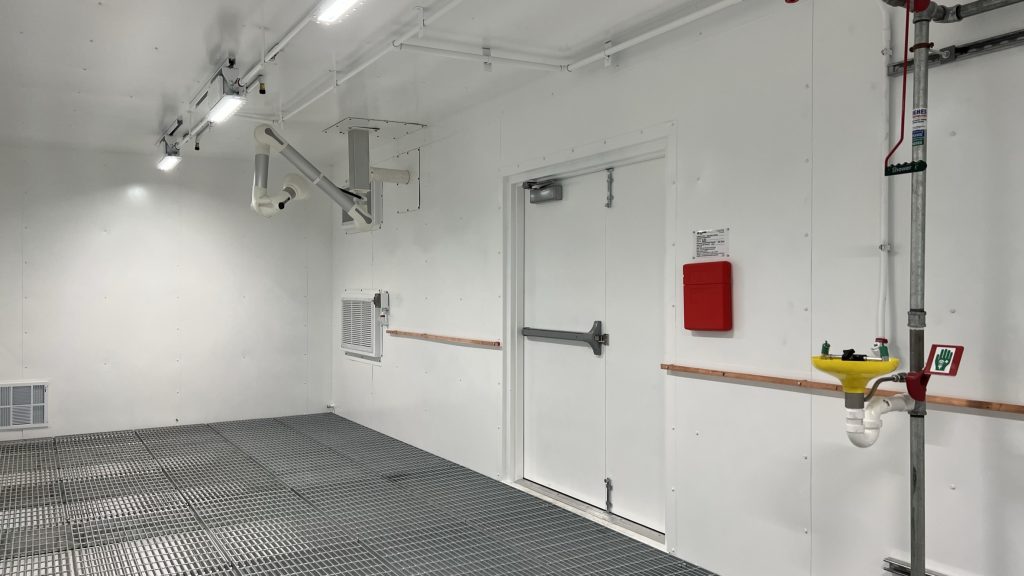
Laboratory & Extraction Buildings
Chemical Storage Rooms
Multi-Purpose Buildings
- Classified electrical systems (Class 1, Division 1 or 2)
- Explosion-proof lighting, wiring, and equipment integration
- Wide variety of ventilation options: passive, mechanical, fume hoods, or fume nozzles
- Secondary containment sump systems
- Configurable layouts for 1, 2, or modular designs
- Fire-rated construction: for solvent and chemical storage
- Secondary containment: for ethanol, IPA, and other flammable liquids
- Segregation for incompatible chemicals from one another
- Engineered ventilation to reduce vapor accumulation and increase respiratory safety
- Code-compliant designs align with fire and building codes
- Flammable liquids: Ethanol, isopropyl alcohol, and hydrocarbon solvent containment
- Acids/bases: integrated spill containment and corrosion-resistant materials
- Compressed Gasses: CO2/N2 cylinders: with ventilation and secure restraint systems
- Sanitizers/cleaners: Dedicated storage zones with spill containment and segregation
All built to IBC, NFPA, OSHA, and local Authority Having Jurisdiction (AHJ) standards.*
ENGINEERING EXPERTISE TAILORED TO THE PLANT-TOUCHING INDUSTRY
Our in-house team designs for your exact storage needs:
Controlled Temperature Rooms
Hot Gas Injection Freezers
Explosion-Proof Storage Units
Humidity Controlled Spaces
Oils & Fuel – Waste or Dispensing
Distillation Rooms
Mixing Rooms
Packaging & Labeling Materials
Equipment Drop Overs
Multi-Room Complexes
Laboratories
Clean Rooms
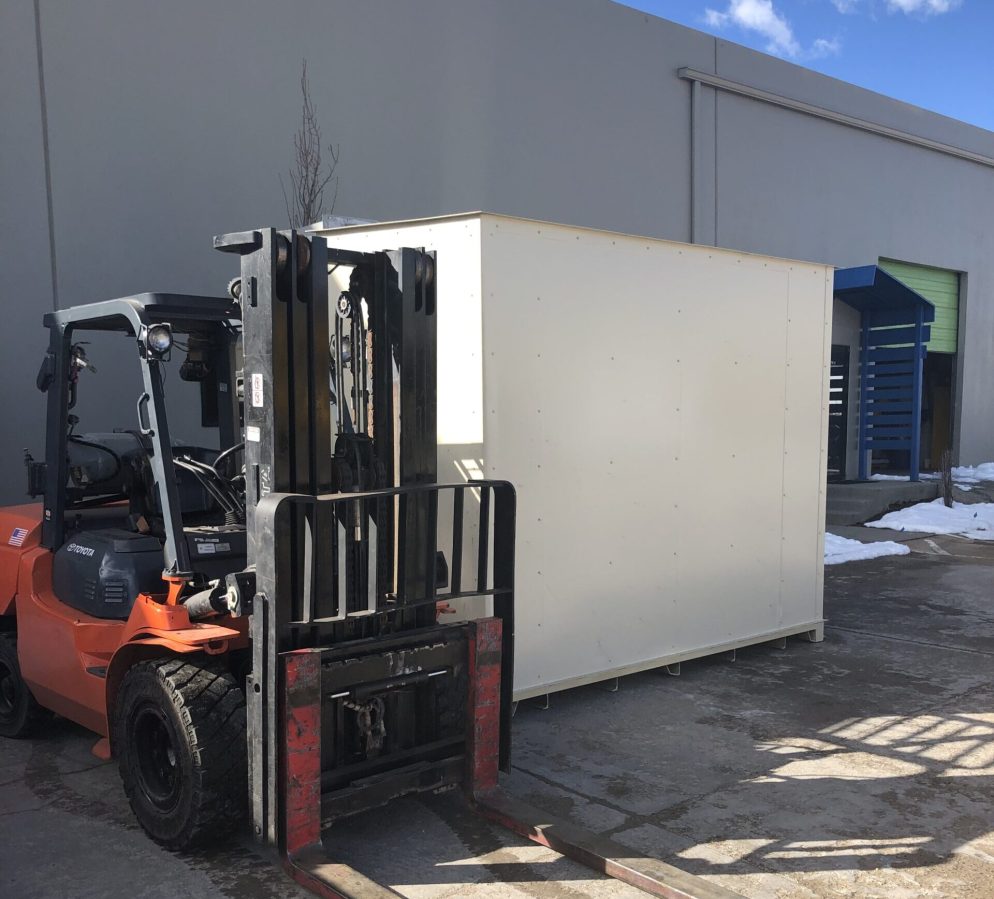
CASE STUDY
FLAMMABLE GROWTH – DURING COVID
When a young company found their operations growing exponentially during a pandemic, they turned to US Chemical Storage.
With needed capacity to store IBC totes carrying more than 500 gallons of ethanol on-site, this building was created for their vital material in the manufacturing process.
In this case study, we show how US Chemical Storage was able to keep their business rolling when others couldn’t.
Common Materials in Regulated Plant Operations
Your environment routinely involves hazardous materials that require specialized storage. They may require segregation, containment, and ventilation to reduce the risk of fire, exposure, or environmental release. These materials introduce risks related to flammability, vapor accumulation, chemical reactivity, and worker exposure—making proper storage design critical for safe, compliant operations.
- Ethanol and alcohol-based solutions
- CO₂ N₂ and other gasses
- Heptane
- Hexane
- Hydrogen peroxide
- Sodium hypochlorite (bleach)
- HCl
- Caustic soda (sodium hydroxide)
- Paracetic acid
- Fuels, oil, and industrial lubricants
- Hydrocarbon solvents (n-butane, isobutane, propane)
- And dozens more preservatives, reagents, and cleaners
Our Signature Products
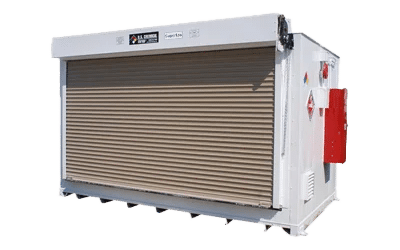
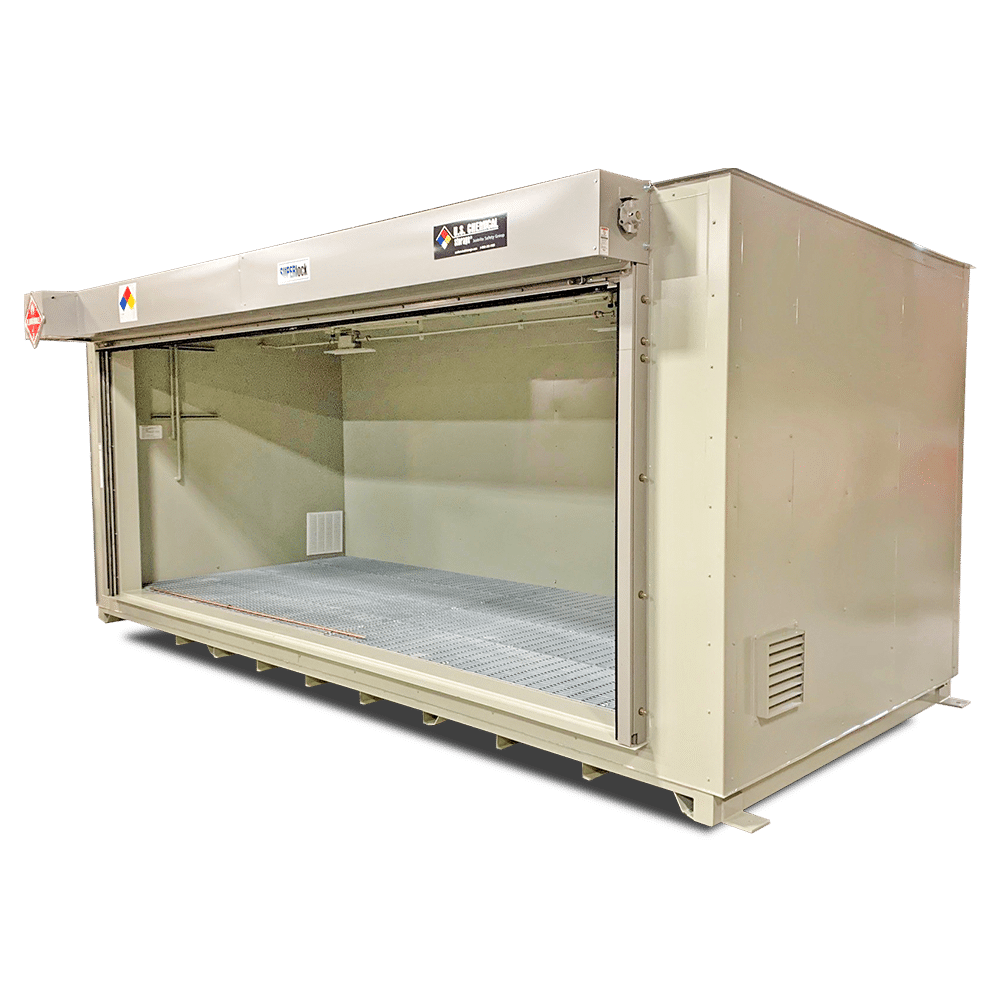
Fire Rated Storage
Fire-rated hazmat storage buildings safely manage risks when storing the most dangerous flammable and hazardous chemicals. With 2-hour or 4-hour construction available, they can offer all the protection required. All Fire Rated Buildings >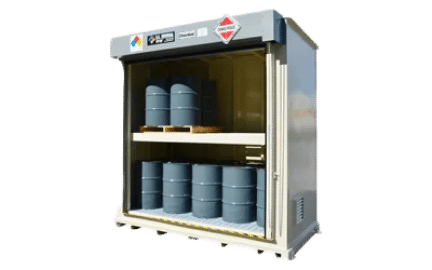
Non-Fire Rated Storage
All U.S. Chemical Storage non-fire rated hazmat buildings are perfect when the chemicals don’t require a fire rating, or you have space to distance the hazards from your people and property. All Non-Fire Rated Buildings >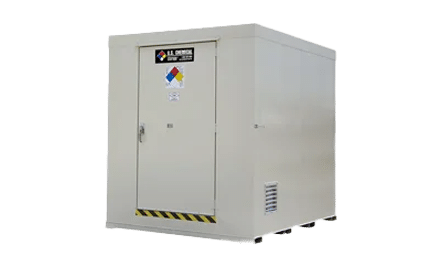
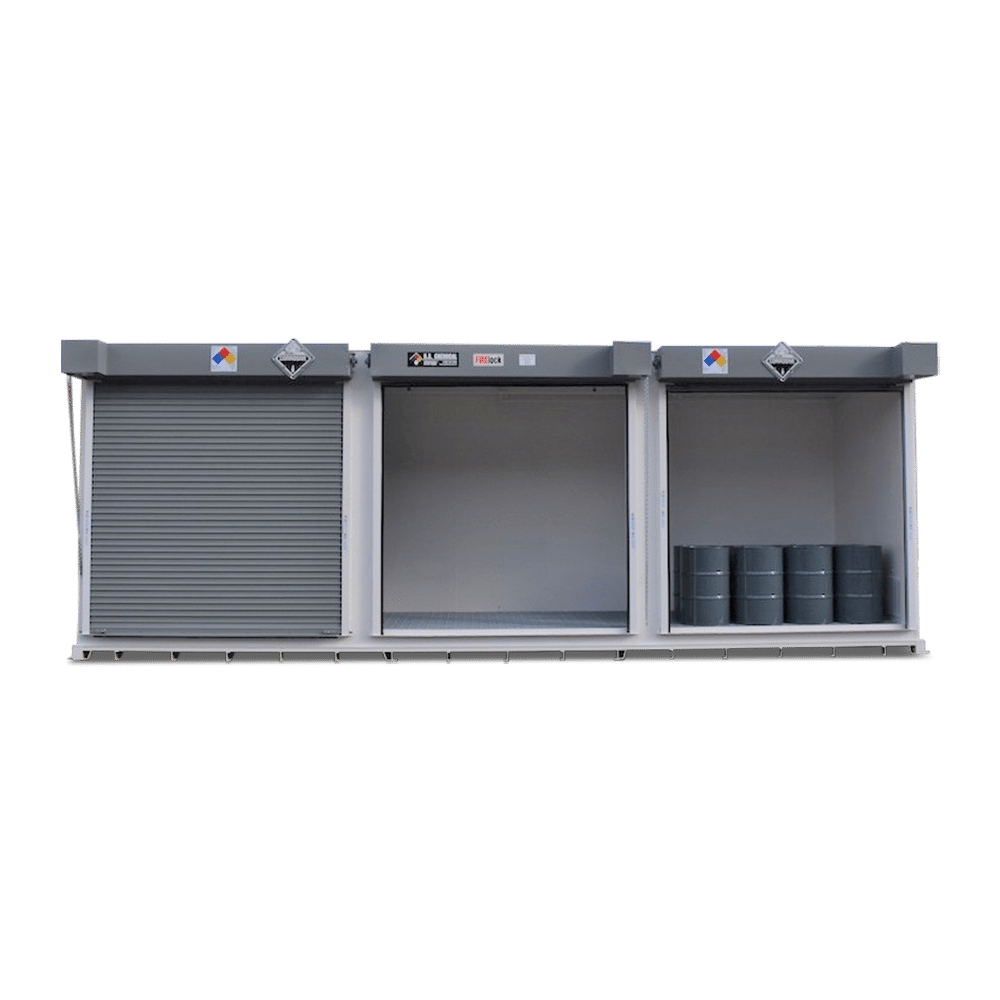
Chemical Lockers
U.S. Chemical Storage engineers outdoor storage lockers with sumps to provide a quick, safe, and compliant solution to drum storage for 2 drums – to 16 drums. All Chemical Lockers >Frequently Asked Questions
These highly regulated facilities commonly store flammable liquids like ethanol, cleaning and sanitation chemicals, corrosives, and aerosols. Each requires specific storage conditions, including ventilation, fire protection, and secondary containment to remain compliant.
Efficient material handling is baked in to every building we ship, with racking, ramps, doors, and safety equipment that allow the building to easily enhance your day-to-day operaions.
For specifics about your particular need, grab your SDS and reach out to us!
Fire-rated storage is often required when storing flammable or combustible liquids, especially in larger quantities or near production areas or distillation/extraction areas. The exact requirement depends on chemical type, volume, and local fire codes. Your Authority Having Jurisdiction (AHJ) can let you know the expectation.
Compliance with hazardous materials requires aligning with OSHA, NFPA, EPA, and local AHJ regulations. This includes proper chemical segregation, ventilation, spill containment, labeling, and use of engineered storage solutions.
Ethanol should be stored in a fire-rated, code-compliant chemical storage building designed for flammable liquids. Proper storage may include explosion-proof ventilation, spill containment, and separation from ignition sources. Facilities must follow NFPA, OSHA, and local fire code requirements and largely depends on the volume of chemical being stored and proximity to production areas or property setbacks.
Yes, outdoor prefabricated chemical storage buildings are often used to safely separate new-clean chemicals from waste chemicals or corrosives from flammables. When properly engineered, they meet OSHA, NFPA, and EPA requirements.
The right solution depends on the type and volume of chemicals, required fire rating, ventilation needs, and facility layout. Working with a manufacturer that offers consultative design ensures compliance and operational efficiency.
Many extracted ingredients—especially those containing ethanol, oils, or other solvents—are classified as flammable liquids and must be stored accordingly. Even small quantities can pose fire and compliance risks if improperly handled, making dedicated chemical storage solutions essential in food and beverage environments.
When you’re first speaking with one of our experienced sales reps, they’ll walk you through the process. Generally, you’ll want to look at your Safety Data Sheet (SDS) to determine the type of chemical you’re storing and any storage requirements listed.
There are three main questions you should answer before engineering or design can begin a quote on a building:
- + WHAT is to be stored?
- + HOW MUCH of it is being stored?
- + WHERE is the location it will be stored?
You will eventually need to consult with your local “Authority Having Jurisdiction” (AHJ) – usually your local code expert or fire marshal – to determine your area’s specific storage building requirements. So you want to be sure who that is in your area.
Our team at U.S. Chemical Storage has a wealth of knowledge, experience, and resources to help analyze your storage needs. Ultimately, the final approval is made by the local AHJ, so you will need to ask them about your requirements fairly early in the planning process.
LEARNING RESOURCES
ARTICLES
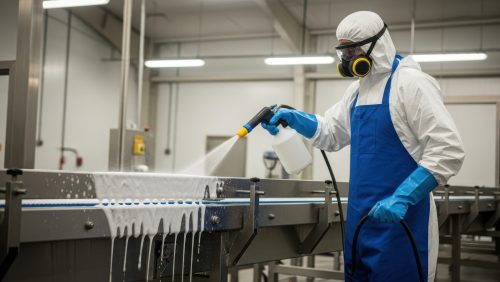
Blog: FDA Key Impacts for Food Manufacturing EHS & Operations Teams 2026
FDA’s “2026 Food Safety Deliverables” What EHS and Operations Leaders Must Prepare For Now The U.S. Food and Drug Administration’s (FDA) Human Foods Program (HFP) 2026 Priority Deliverables document represents one […]
Blog:
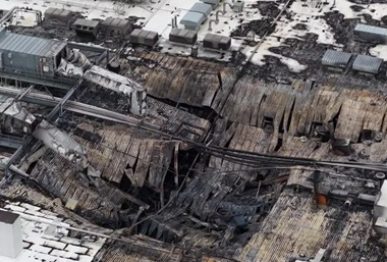
Chemical Fire Risk in Ammonia Refrigeration: Lessons from the Koch Foods Fairfield Explosion
The fire’s heat was so intense it melted sections of the building’s steel structure and caused a large portion of the 600,000 sq. ft. facility’s roof to collapse. It took roughly 100 firefighters about seven hours to bring the blaze under control […]
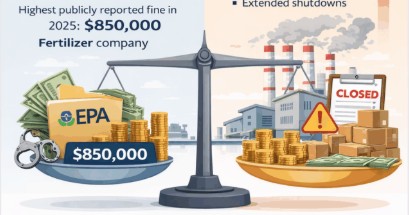
Blog: The Real Cost of a Chemical Fire Isn't the Fire - It's the Shutdown
When companies think about the cost of a chemical fire (aside from any human injuries or loss, of course), they often focus on damaged inventory, destroyed property, and cleanup expenses. But in most real-world incidents […
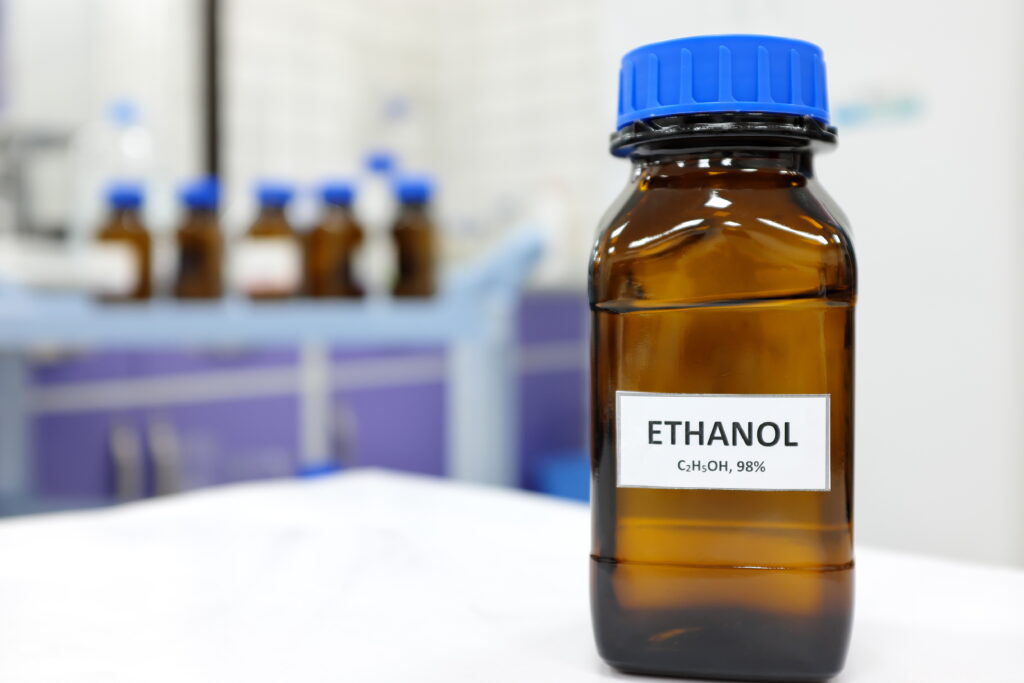
Blog: Expert Tips For Your Ethanol Storage
The NFPA classifies ethanol as a Class IB flammable liquid. Therefore, this chemical should be handled and stored with great care. Ethanol chemical storage buildings are a key part of this chemical’s day-to-day use and preservation. […]
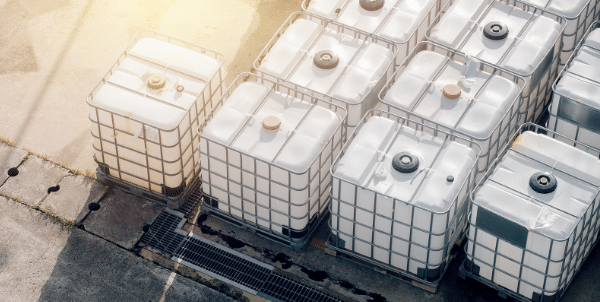
Blog: Safe Sodium Hypochlorite (Bleach) Storage Solutions
Sodium hypochlorite is a powerful oxidizing agent most commonly recognized as liquid bleach. In industrial, municipal, and manufacturing environments, proper sodium hypochlorite storage is critical to protecting employees, facilities […]

Blog: Use Chemical Storage Buildings When Storing Flavoring Chemicals
Flammable and combustible flavorings should be stored in safe chemical storage buildings equipped with fire suppression, mechanical ventilation and spill containment […]
Built for Growth. Designed for Compliance. Just Like You.
Contact U.S. Chemical Storage by filling out a contact us form today for a no-obligation assessment conversation and preliminary quote. You can also use our easy ‘Design and Build’ tool that can help you visualize the basics. We will review your storage or lab building needs, material handling requirements, and any opportunities to close compliance gaps, to propose a perfect turnkey solution that keeps your operation inspection ready.
- External Links:
- The Cannabis Industry and Work-related Asthma and Allergies: https://www.cdc.gov/niosh/bulletin/2023/cannabis-allergies.html
- Cannabis Extraction Risks High for the Cannabis Entrepreneur:
- https://www.hubinternational.com/blog/2019/12/cannabis-extraction-risks/
- Growing practices and the use of potentially harmful chemical additives among a sample of small-scale cannabis growers in three countries:
- https://www.sciencedirect.com/science/article/abs/pii/S0376871618305490
- NFPA 420, Standard on Fire Protection of Cannabis Growing and Processing Facilities:
- NFPA 420, Standard on Fire Protection of Cannabis Growing and Processing Facilities