
US CHEMICAL STORAGE SOLUTIONS FOR THE
FOOD & BEVERAGE INDUSTRY
Food and beverage storage is not just about keeping materials cold or dry. It is about safeguarding product quality, preventing contamination, and avoiding costly recalls or fines. Poor storage can lead to spoilage, cross-contamination, or regulatory violations that shut down production lines—through insurance or regulatory audits, or even worse, through explosions or fires.
Facility leaders need food storage containers and cold storage buildings that handle
temperature-sensitive ingredients, preservatives, acids, and gases while maintaining strict chain-of-custody documentation.
Store your food and beveratge flavorings and products safely, as well as other hazmat involved in your operations, and store them with confidence. Talk to us today about your risks.
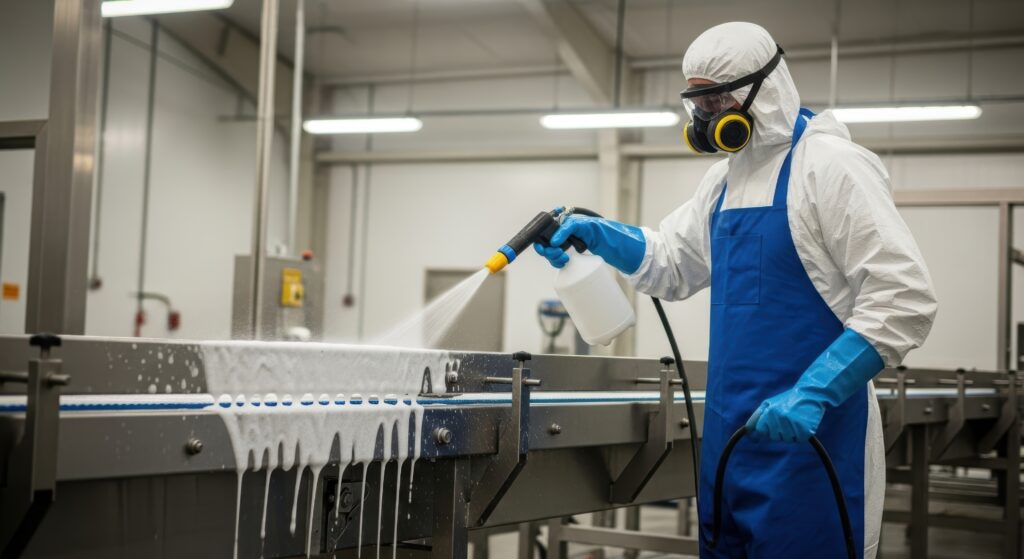
The flavorings, food, and beverage storage industry faces some of the toughest regulatory standards globally, ensuring safe storage and handling of chemicals and hazardous materials.
From processing plants to bottling lines and flavoring and additive manufacturing facilities, proper food storage containers and cold storage buildings are non-negotiable for compliance, product integrity, and operational efficiency. Managing these substances is critical for product quality, regulatory compliance, and the safety of both workers and consumers.
U.S. Chemical Storage specializes in compliant solutions that protect your ingredients, chemicals, and finished goods while meeting FDA, USDA, HACCP, and local fire codes.
Food & Beverage Industry Solutions
Eliminate Risk in Your Chemical and Hazmat Storage
NEW WHITEPAPER!
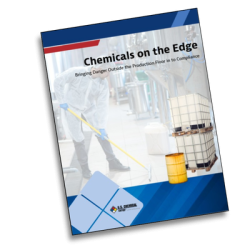
Are you paying attention to the peripheral spaces outside of production areas where chemical issues can lead to regulatory risk, contamination, and injury?
These areas can include maintenance sheds, fleet garages, packaging areas, water treatment facilities, and more. With this whitepaper, we can tell you the code violations commonly found in these areas and how you can avoid them.

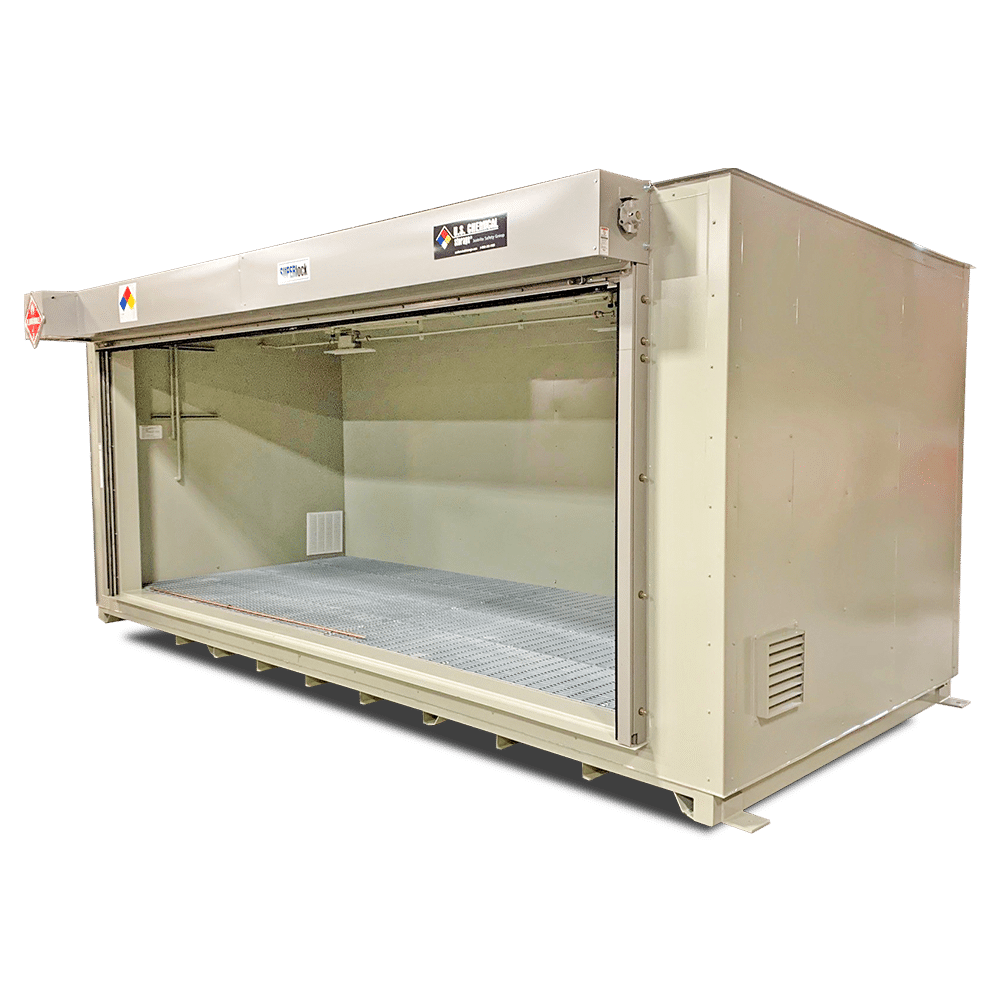
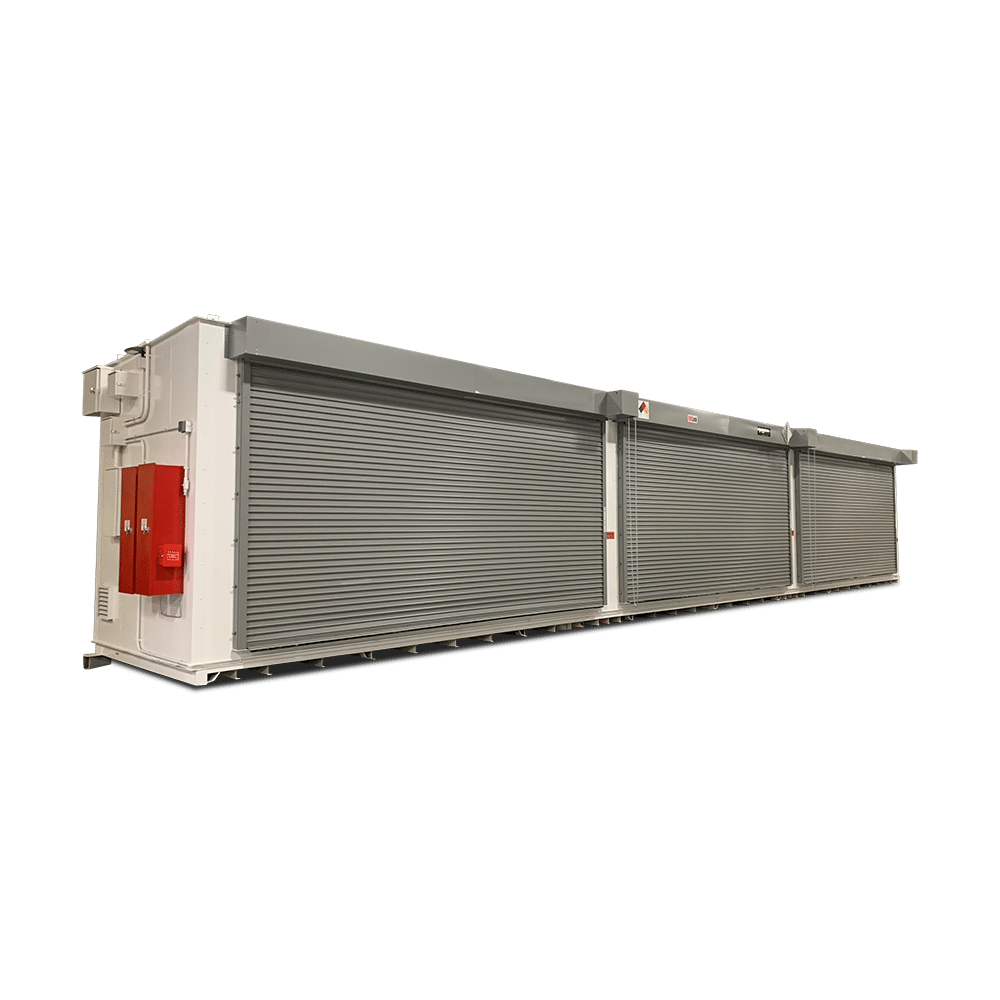
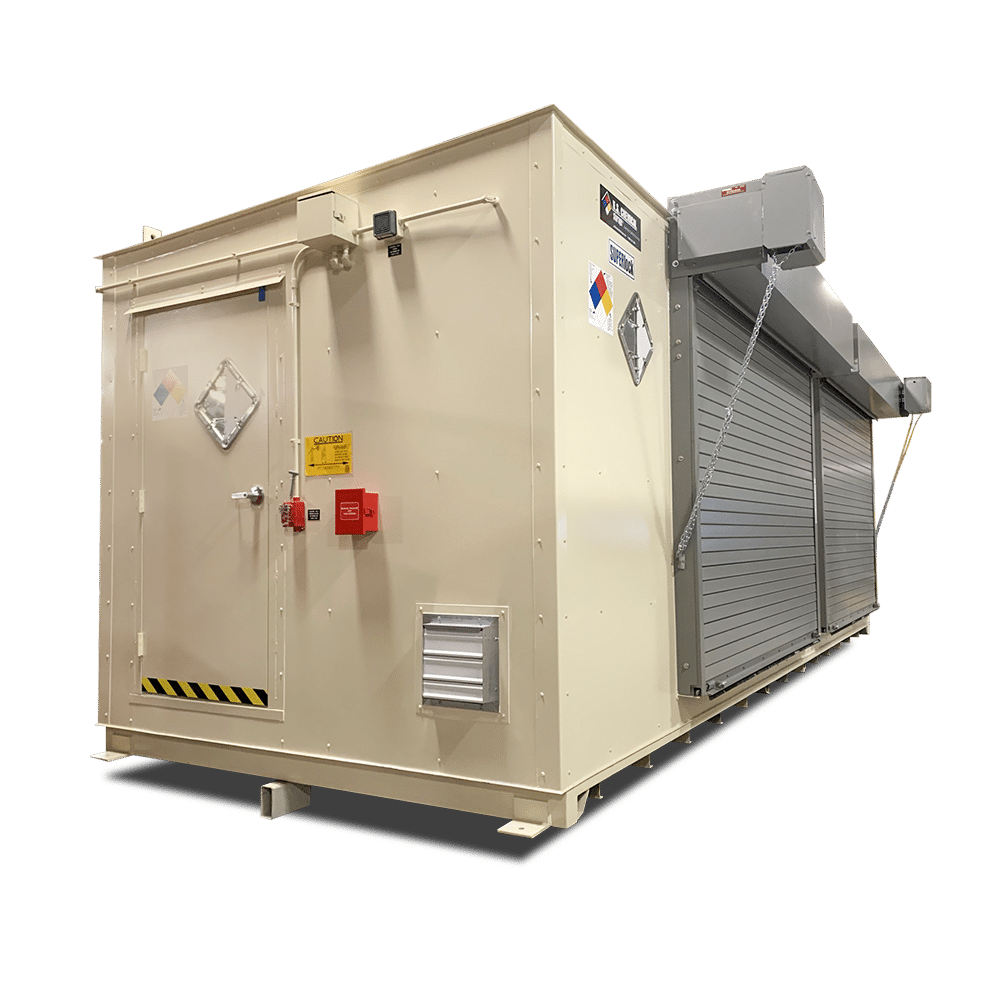
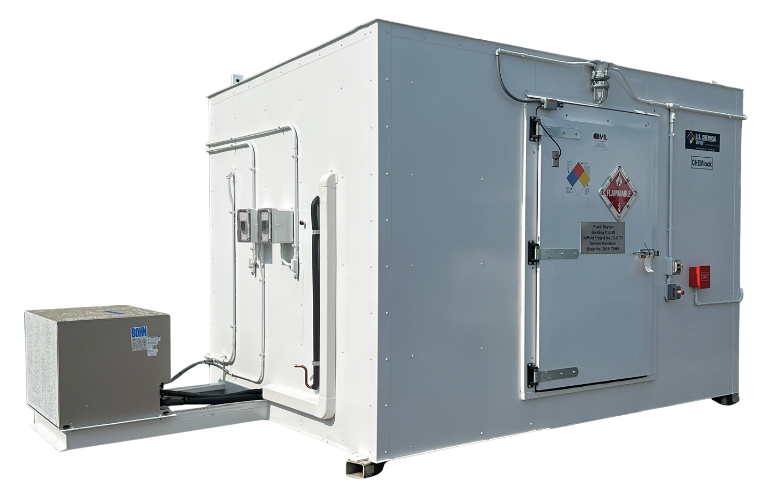
Why Compliant Flavoring, Food and Beverage Storage Matters for Your Facility
Food and beverage storage is not just about keeping things cold or dry. It is about safeguarding product quality, preventing contamination, and avoiding costly recalls or fines. Poor storage can lead to spoilage, cross-contamination, or regulatory violations that shut down production lines—sometimes even involuntarily through explosions or fires.
Facility leaders need food storage containers and cold storage buildings that handle temperature-sensitive ingredients, preservatives, acids, and gases while maintaining strict chain-of-custody documentation.
Handling chemicals safely is essential for maintaining the highest product standards. Some common materials we routinely work with are:
- Solvents - For flavor extraction, cleaning, and sanitation processes.
- Preservatives - To extend the shelf life of food and beverage products.
- Chemical Reagents - Used in food processing, flavor development, and quality control.
- Acids and Bases - For pH adjustment, preservation, and flavor enhancement.
- Gases - including carbon dioside and nitrogen for carbonation, packaging, and preservation.
- Cleaning Agents & Sanitizers - Crucial for maintaining hygience in food processing environments.
- Maintenance Materials - These may include lubricants and fuels that maintain equipment.
In 2026, with tightening FSMA traceability rules and state-level PFAS packaging restrictions, compliant storage solutions are your first line of defense.
Our extensive portfolio includes projects for food and beverage manufacturers, flavoring companies, research institutions, and processing facilities. Therefore, our custom buildings and containers ensure:#E02C38
- Precise temperature and humidity control for perishables
- Segregated storage for hazardous chemicals vs. food-grade materials
- Fire-rated construction for solvents, CO2, and flammable cleaners
- Seamless integration with your existing processing workflow
Whether you run a high-volume bottling plant or a specialty flavor manufacturer, reliable food and beverage storage keeps your operations running smoothly and audit-ready.
43% Higher Injury Rates
Food manufacturing sees significantly more workplace injuries than the national average.
8.1 Million Inspections Annually
Food facilities are under constant regulatory scrutiny, increasing the importance of compliance.
$175,000 Max Penalty per Violation
Serious hazardous material violations can result in substantial fines and liability.
Temperature Control for Perishables
Ingredients like dairy, juices, and proteins demand cold storage buildings with consistent temperatures between 32°F-40°F. Sudden fluctuations compromise shelf life and trigger microbial growth. Our insulated panels and redundant HVAC systems maintain stability even during power events or peak production.
Chemical Segregation and Safety
Solvents, acids (citric, acetic), bases (sodium hydroxide), and gases (CO2, nitrogen) require dedicated food storage containers separate from edibles. FM-approved cabinets and rooms prevent leaks or reactions that could contaminate production areas.
Humidity and Clean Room Standards
Flavorings, preservatives (sodium benzoate, potassium sorbate), and packaging materials need humidity-controlled spaces (30-50% RH) to avoid clumping or degradation. Class 100 clean rooms protect sterile additives and reagents.
Traceability and Regulatory Documentation
2026 FSMA 204 rules mandate lot-level tracking for high-risk foods. Our storage solutions include built-in racking, labeling systems, and digital logging interfaces that simplify compliance reporting.
OUR FOOD AND BEVERAGE SOLUTIONS
Custom Cold Storage Buildings
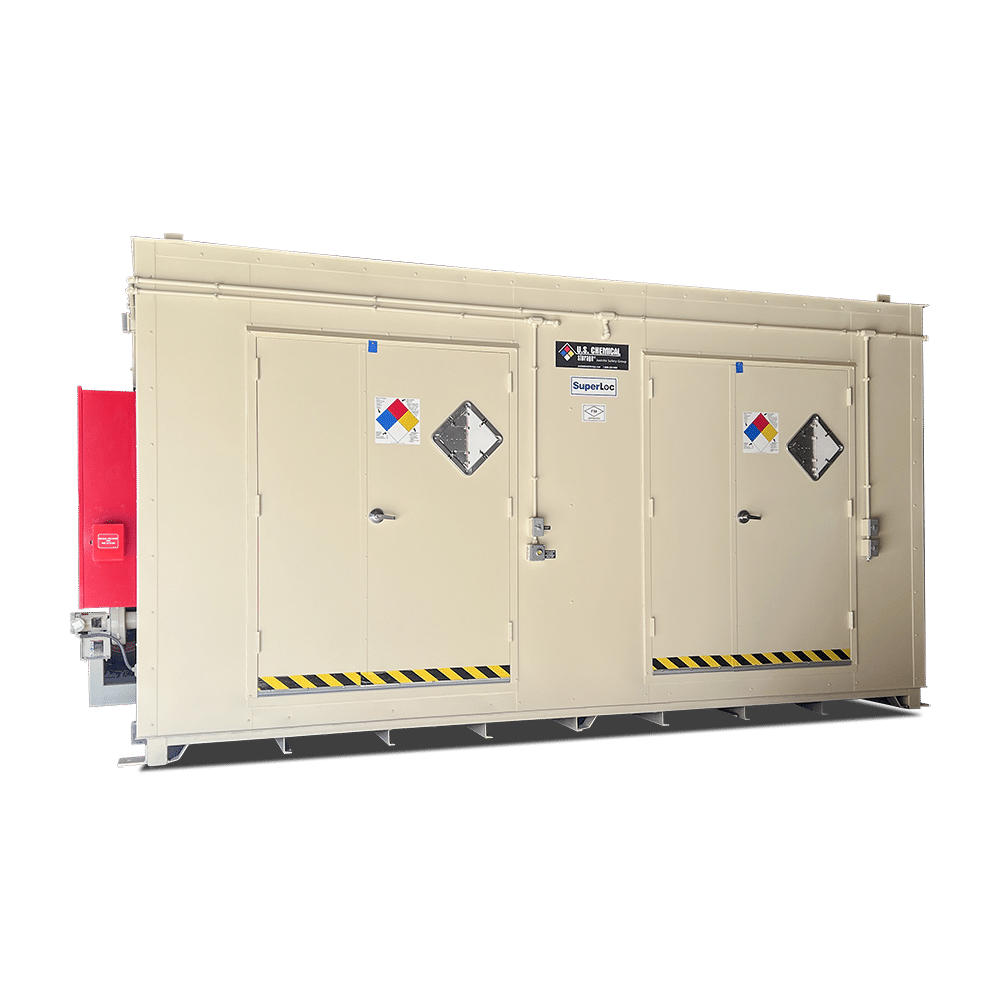
FM-Approved Chemical Storage Rooms
Multi-Purpose Processing Buildings
- R-30+ insulation for energy efficiency
- Stainless steel interiors, sloped floors for drainage
- Automated temp/humidity monitoring with alarms
- Expandable designs for growing facilities
- Perfect for bulk storage adjacent to processing lines
- R-30+ insulation for energy efficiency
- Stainless steel interiors, sloped floors for drainage
- Automated temp/humidity monitoring with alarms
- Expandable designs for growing facilities
- Perfect for bulk storage adjacent to processing lines
- Ethanol, propylene glycol containment.
- Acids/bases: Spill containment and corrosion-resistance
- CO2/N2 cylinders: Ventilated, explosion-proof enclosures
- Sanitizers/cleaners: Spill pallets and neutralization systems
All built to IBC, NFPA, OSHA, and local Authority Having Jurisdiction (AHJ) standards.*.
ENGINEERING EXPERTISE TAILORED TO THE FOOD & BEVERAGE INDUSTRY
Our in-house team designs for your exact food and beverage storage needs:
Controlled Temperature Rooms
Hot Gas Injection Freezers
Explosion-Proof Storage Units
Humidity Controlled Spaces
Oils & Fuel – Waste or Dispensing
Distillation Rooms
Mixing Rooms
Packaging & Labeling Materials
Equipment Drop Overs
Multi-Room Complexes
Laboratories
Clean Rooms
CASE STUDY
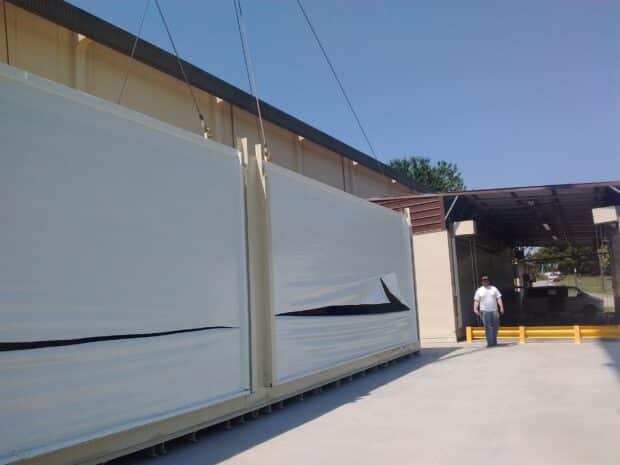
FROM GRANDFATHER TO GROWTH
“Grandfathered” code allows older facilities to continue under outdated codes to ensure uptime. However, when new growth occurs, a company must conform and update to the current codes.
This can be a dangerous problem that catches many operations off guard as they grow, diversify their product mix, or relocate.
In this case study, we show how a prefabricated, U.S. Chemical Storage code-compliant building solved the problem for one such customer. Quickly.
Chemicals and Flavorings We Commonly Store in Food & Beverage
Food and beverage storage is not just about keeping things cold or dry. It is about safeguarding product quality, preventing contamination, and avoiding costly recalls or fines. Poor storage can lead to spoilage, cross-contamination, or regulatory violations that shut down production lines—sometimes even involuntarily through explosions or fires.
Facility leaders need food storage containers and cold storage buildings that handle temperature-sensitive ingredients, preservatives, acids, and gases while maintaining strict chain-of-custody documentation.
Handling chemicals safely is essential for maintaining the highest product standards. Some common materials we routinely work with are:
- Ethanol (flavor extraction, sanitation)
- Acetic Acid, Citric Acid (preservation, pH control)
- Sodium Benzoate, Potassium Sorbate (shelf-life extension)
- Potassium Sorbate (mold, yeast, and fungi growth inhibitor)
- Sodium Hydroxide (cleaning, processing)
- Carbon Dioxide, Nitrogen (carbonation, packaging)
- Propylene Glycol (heat transfer, sweeteners)
- And dozens more preservatives, reagents, and cleaners
Our Signature Products
Fire Rated Storage
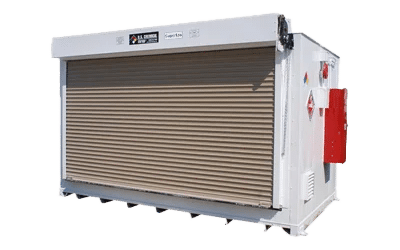
Fire-rated hazmat storage buildings safely manage risks when storing the most dangerous flammable and hazardous chemicals. With 2-hour or 4-hour construction available, they can offer all the protection required. All Fire Rated Buildings >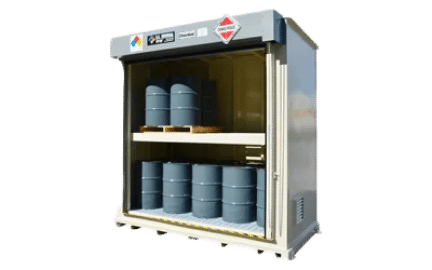
Non-Fire Rated Storage
All U.S. Chemical Storage non-fire rated hazmat buildings are perfect when the chemicals don’t require a fire rating, or you have space to distance the hazards from your people and property. All Non-Fire Rated Buildings >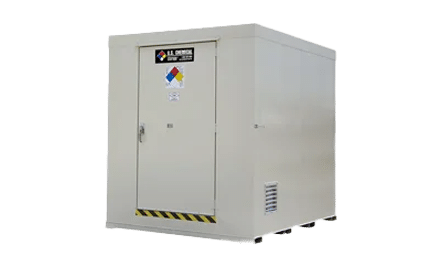
Chemical Lockers
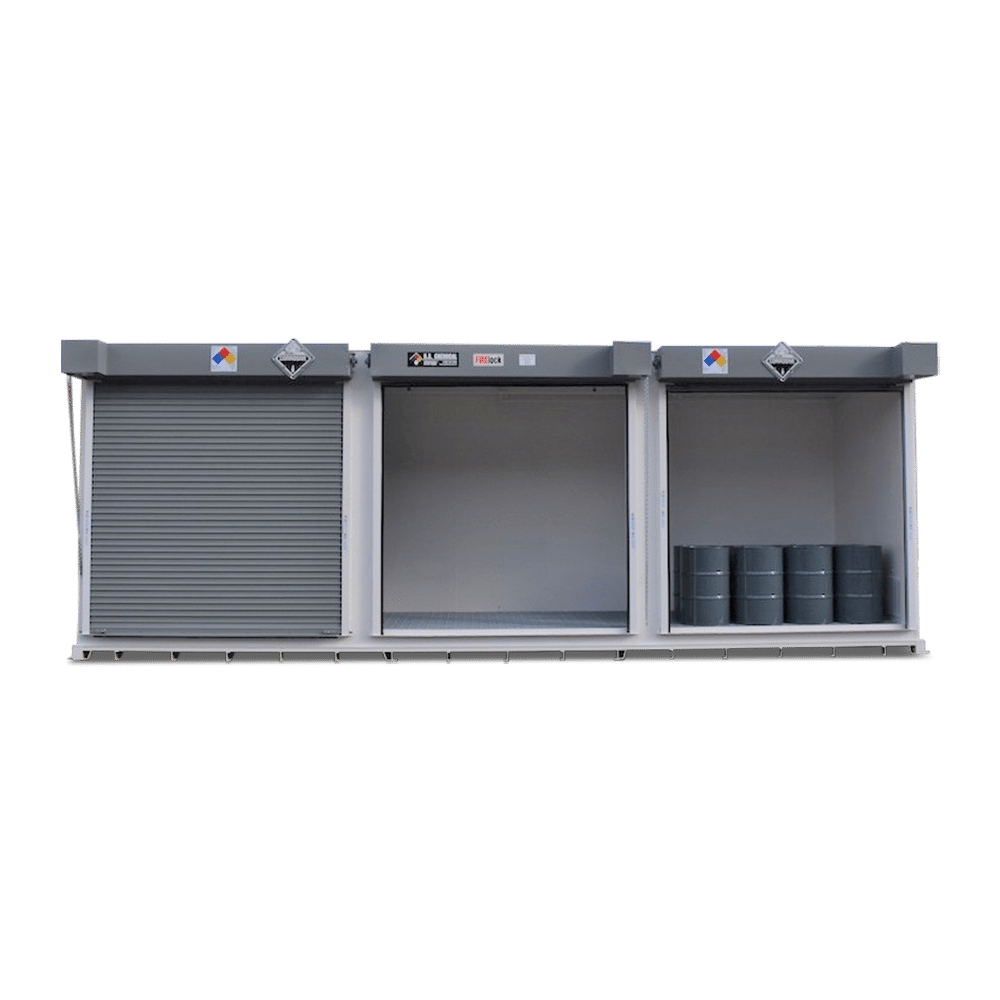
U.S. Chemical Storage engineers outdoor storage lockers with sumps to provide a quick, safe, and compliant solution to drum storage for 2 drums – to 16 drums. All Chemical Lockers >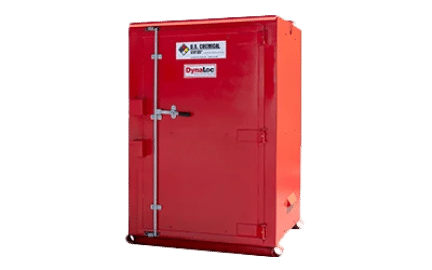
Explosive Magazines
When dealing with explosives, magazines are essential for ATF regulations. We offer a wide variety of Type 2, Type 3, and Type 4 explosive magazine storage solutions to prevent disasters and avoid fines. Custom builds available. See All Explosive Storage >Frequently Asked Questions
Food and beverage facilities commonly store flammable liquids like ethanol, cleaning and sanitation chemicals, corrosives, and aerosols. Each requires specific storage conditions, including ventilation, fire protection, and secondary containment to remain compliant.
Efficient material handling is baked in to every building we ship, with racking, ramps, doors, and safety equipment that allow the building to easily enhance your day-to-day operaions.
For specifics about your particular need, grab your SDS and reach out to us!
Fire-rated storage is often required when storing flammable or combustible liquids, especially in larger quantities or near production areas. The exact requirement depends on chemical type, volume, and local fire codes. Your Authority Having Jurisdiction (AHJ) can let you know the expectation.
Compliance requires aligning with OSHA, NFPA, EPA, and local AHJ regulations. This includes proper chemical segregation, ventilation, spill containment, labeling, and use of engineered storage solutions designed for hazardous materials.
Ethanol should be stored in a fire-rated, code-compliant chemical storage building designed for flammable liquids. Proper storage includes explosion-proof ventilation, spill containment, and separation from ignition sources. Facilities must follow NFPA, OSHA, and local fire code requirements based on the volume stored and proximity to production areas.
Yes, outdoor prefabricated chemical storage buildings are often used to safely separate hazardous chemicals from production areas. When properly engineered, they meet OSHA, NFPA, and EPA requirements.
The right solution depends on the type and volume of chemicals, required fire rating, ventilation needs, and facility layout. Working with a manufacturer that offers consultative design ensures compliance and operational efficiency.
Many flavoring ingredients—especially those containing ethanol or other solvents—are classified as flammable liquids and must be stored accordingly. Even small quantities can pose fire and compliance risks if improperly handled, making dedicated chemical storage solutions essential in food and beverage environments.
When you’re first speaking with one of our experienced sales reps, they’ll walk you through the process. Generally, you’ll want to look at your Safety Data Sheet (SDS) to determine the type of chemical you’re storing and any storage requirements listed.
There are three main questions you should answer before engineering or design can begin a quote on a building:
- + WHAT is to be stored?
- + HOW MUCH of it is being stored?
- + WHERE is the location it will be stored?
You will eventually need to consult with your local “Authority Having Jurisdiction” (AHJ) – usually your local code expert or fire marshal – to determine your area’s specific storage building requirements. So you want to be sure who that is in your area.
Our team at U.S. Chemical Storage has a wealth of knowledge, experience, and resources to help analyze your storage needs. Ultimately, the final approval is made by the local AHJ, so you will need to ask them about your requirements fairly early in the planning process.
LEARNING RESOURCES
ARTICLES
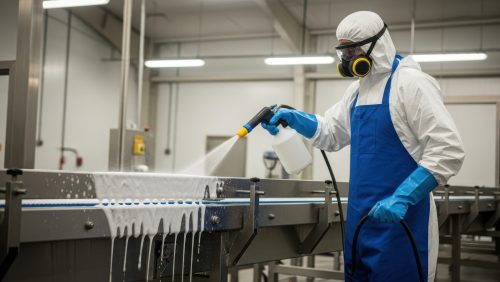
Blog: FDA Key Impacts for Food Manufacturing EHS & Operations Teams 2026
FDA’s “2026 Food Safety Deliverables” What EHS and Operations Leaders Must Prepare For Now The U.S. Food and Drug Administration’s (FDA) Human Foods Program (HFP) 2026 Priority Deliverables document represents one […]
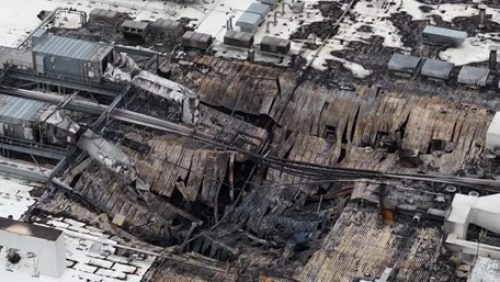
Blog:
Chemical Fire Risk in Ammonia Refrigeration: Lessons from the Koch Foods Fairfield Explosion
The fire’s heat was so intense it melted sections of the building’s steel structure and caused a large portion of the 600,000 sq. ft. facility’s roof to collapse. It took roughly 100 firefighters about seven hours to bring the blaze under control. Due to concerns about a toxic anhydrous ammonia gas release, a two‑mile shelter-in-place […]
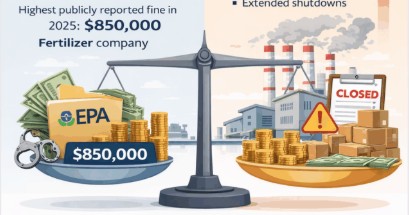
Blog: The Real Cost of a Chemical Fire Isn't the Fire - It's the Shutdown
When companies think about the cost of a chemical fire (aside from any human injuries or loss, of course), they often focus on damaged inventory, destroyed property, and cleanup expenses. But in most real-world incidents […

Blog: Protect Your Microbrewery with Chemical Storage Buildings
Flammable liquids are subject to regulations and controls. Applicable standards include NFPA 30 and OSHA 1910.106, which define the categories of flammable liquids. International Building […]
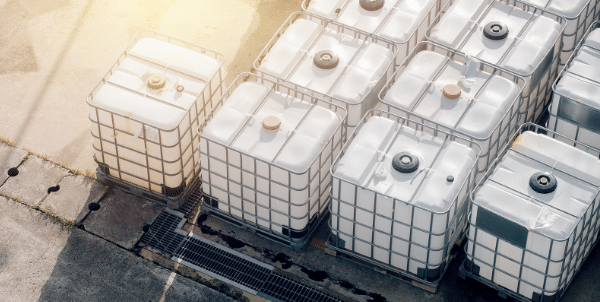
Blog: Safe Sodium Hypochlorite (Bleach) Storage Solutions
Sodium hypochlorite is a powerful oxidizing agent most commonly recognized as liquid bleach. In industrial, municipal, and manufacturing environments, proper sodium hypochlorite storage is critical to protecting employees, facilities […]

Blog: Use Chemical Storage Buildings When Storing Flavoring Chemicals
Flammable and combustible flavorings should be stored in safe chemical storage buildings equipped with fire suppression, mechanical ventilation and spill containment […]
Ready to Upgrade or Re-evaluate the Storage Solutions at Your Facility?
Contact U.S. Chemical Storage by filling out a contact us form today for a no-obligation assessment conversation and preliminary quote. You can also use our easy ‘Design and Build’ tool that can help you visualize the basics. We will review your hazmat, chemical, or cold storage building needs, material handling requirements, and any opportunities to close compliance gaps, to propose a perfect turnkey solution that fits your budget and timeline.
External Links:
Essential Food Hygiene: “6 Potential Hazards from Poor Food Storage”
https://essentialfoodhygiene.co.uk/6-potential-hazards-from-poor-food-storage/