
Chemical Incidents Cost More Than Fines

Mandy Marxen – US Chemical Storage
The Costs Beyond EPA Fines

When an industrial chemical incident occurs, attention naturally turns to the most visible possibilities: fire, explosion, injuries and environmental contamination.
In Garden Grove, California, an overheated tank containing thousands of gallons of methyl methacrylate, or MMA, raised fears of a catastrophic explosion in May 2026. Approximately 50,000 residents were evacuated while emergency personnel worked to cool and stabilize the tank. A crack eventually relieved pressure, and the feared explosion did not occur.
That was a fortunate outcome. It was not a cost-free outcome.
The incident disrupted residents, closed businesses, mobilized emergency agencies and triggered state and federal scrutiny. Federal agents subsequently collected records and evidence related to the storage, use, disposal and temperature control of the chemical. Lawsuits filed by residents, workers and businesses seek compensation for evacuation expenses, health concerns, lost business and other alleged damages.
Garden Grove is a reminder that manufacturers do not need to experience a building-destroying fire to face a financially damaging chemical emergency.
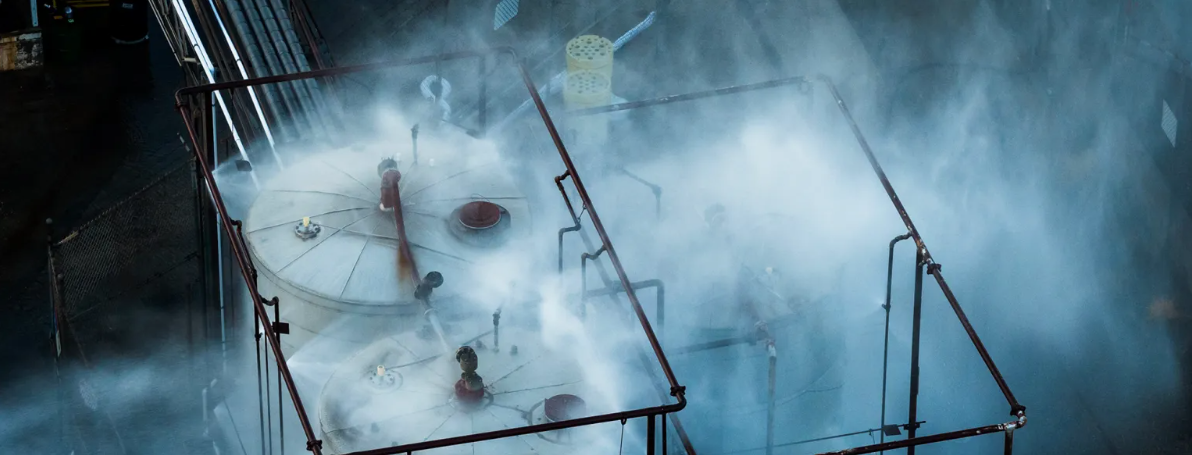
Shot of the Garden Grove, CA overheating tank of methacrylate in May, 2026 at GKN Aerospace being deluged with water.
Regulatory Fines May Be Only One Line Item
Environmental fines attract attention because they are public, measurable and easy to place in a headline. But a fine may represent only a small part of the total financial exposure following a chemical release or threatened release.
Under the federal Comprehensive Environmental Response, Compensation, and Liability Act, commonly known as CERCLA or Superfund, the government may investigate releases or threatened releases of hazardous substances, conduct response work and pursue responsible parties for qualifying cleanup costs.
California’s Hazardous Substance Account Act provides the state with similar authority to investigate hazardous-substance releases, oversee or perform response actions and seek recovery of certain costs from responsible parties.
Whether a particular law applies depends on the substance, the nature of the release, the environmental impact and the findings of regulatory agencies. Garden Grove remains under investigation, and manufacturers should avoid assuming that publicly reported activity means liability has already been determined.
The broader lesson is clear: when regulators, emergency agencies or contractors perform extensive response work, the facility may face costs that extend well beyond a conventional penalty.
FURTHER READING: The Real Cost of a Chemical Fire Isn't the Fire — It's the Shutdown
Cleanup Costs Begin Before Any Contamination is Confirmed
A chemical emergency can require substantial response spending even when responders prevent a catastrophic release.
Potential expenses may include:
- 1) Emergency hazardous-material response
- 2) Chemical stabilization and removal
- 3) Specialized transportation and disposal
- 4) Air, soil, sewer, and stormwater testing
- 5) Environmental consultants and legal counsel
- 6) Facility inspections and forensic analysis
- 7) Public notifications and community assistance
- 8) Long-term monitoring by regulatory bodies
- 9) Facility repairs and process redesign

Roughly 50,000 residents were forced to flee their homes in Garden Grove and surrounding areas during the GKN Aerospace chemical incident involving methyl methacrylate
Those costs may accumulate while investigators are still determining what happened and whether contamination occurred. Orange County officials have launched their own investigation apart from Federal Authorities, and have demanded $4M from the company to offset the costs of firefighters during the multiple days of risking their lives to cool the tanks, as well as additional cleanup.
The Garden Grove response included cooling operations, evacuation management, chemical monitoring and plans for specialized removal and disposal. Authorities also continued monitoring air and checking potential drainage pathways after the immediate threat had subsided.
This illustrates an important risk-management principle: avoiding an explosion does not necessarily avoid an expensive response.
In other words, there may not be one universal containment number that applies to every facility.
FURTHER READING: Aerospace and Aviation Chemical Storage
Civil Litigation Can Exceed the Fine
Manufacturers also face exposure outside the regulatory system.
Following the Garden Grove incident, residents, employees and neighboring businesses filed numerous lawsuits alleging financial losses, health effects and negligence. The claims include requests for compensatory and punitive damages. Local businesses reported disruption during a major holiday weekend, while evacuated residents incurred expenses for temporary lodging, food and transportation.
While the company immediately donated $3M to the Orange County United Way to help the more than 50,000 displaced residents, the emergency relief fund had to close due to overwhelming requests. Many residents have proposed the plant to close entirely, which would lead to some extreme additional costs to the company to relocate.
These residential claims remain allegations unless proven or settled. However, they demonstrate how quickly a single facility incident can create several parallel cost centers:
- 1) Government response and cleanup expenses
- 2) Environmental enforcement
- 3) Private lawsuits
- 4) Business interruption claims
- 5) Community reimbursement demands
- 6) Legal defense costs
- 7) Insurance disputes
- 8) Reputation management
Operational Restrictions Can Magnify the Loss
In a previous article, we examined why the shutdown may be more expensive than the chemical fire itself.
That same principle applies when a fire or explosion never occurs.
A facility involved in a serious chemical emergency may face restricted access, equipment holds, evidence-preservation requirements, process reviews, permit questions or delayed production. Employees may be unable to enter affected areas. Stored materials may need to be removed. Equipment may remain unavailable until engineers and authorities determine that operations can safely resume.
For manufacturers operating on tight production schedules, even a limited shutdown can affect customer order commitments, labor utilization, supplier relationships, contract performance, and revenue forecasts.
The regulatory penalty is typically a defined number. Lost production can continue increasing every day.
Cleanup Liability Is a Storage-Planning Issue
Manufacturers often treat environmental liability as a legal or compliance concern. In practice, it begins with engineering, process, and storage decisions.
A properly designed chemical storage strategy cannot eliminate every process risk. It can, however, help isolate hazardous materials, protect occupied operations, control spills and support a more manageable emergency response.
Depending on the chemicals, quantities and site layout, a manufacturer may need a dedicated hazardous material storage building, a flammable and combustible storage solution or a fire-rated hazmat storage building.
The goal is not simply to avoid an EPA fine. “No explosion” does not mean “no consequence.”
For manufacturers storing flammable, reactive or hazardous chemicals, that may be the most important lesson of all.
Evaluate Your Chemical Storage Risks Before an Incident
U.S. Chemical Storage designs prefabricated chemical storage buildings around each facility’s materials, quantities, operational requirements and applicable codes.
Speak with our team to evaluate fire rating, secondary containment, ventilation, temperature control and other safeguards before a chemical storage concern develops into an operational and financial emergency. Do it today, before an event occurs.
The Garden Grove incident began on May 21, 2026, involved an overheated MMA tank holding an estimated 6,000–7,000 gallons, and led to the evacuation of roughly 50,000 residents. It had to be cooled with large amounts of water to prevent a catastrophic explosion. A crack relieved pressure before an explosion occurred; subsequent federal and county investigations, lawsuits and continued environmental monitoring are ongoing at this time.
References:
CalMatters: Superfund-CERCLA Overview
KTLA: Orange County Seeks $4M from GKN Aerospace over May 2026 Inident
California Department of Toxic Substances Control: DTSCA California