
Cannabis Extraction Safety Lessons from the Sand Springs Explosion
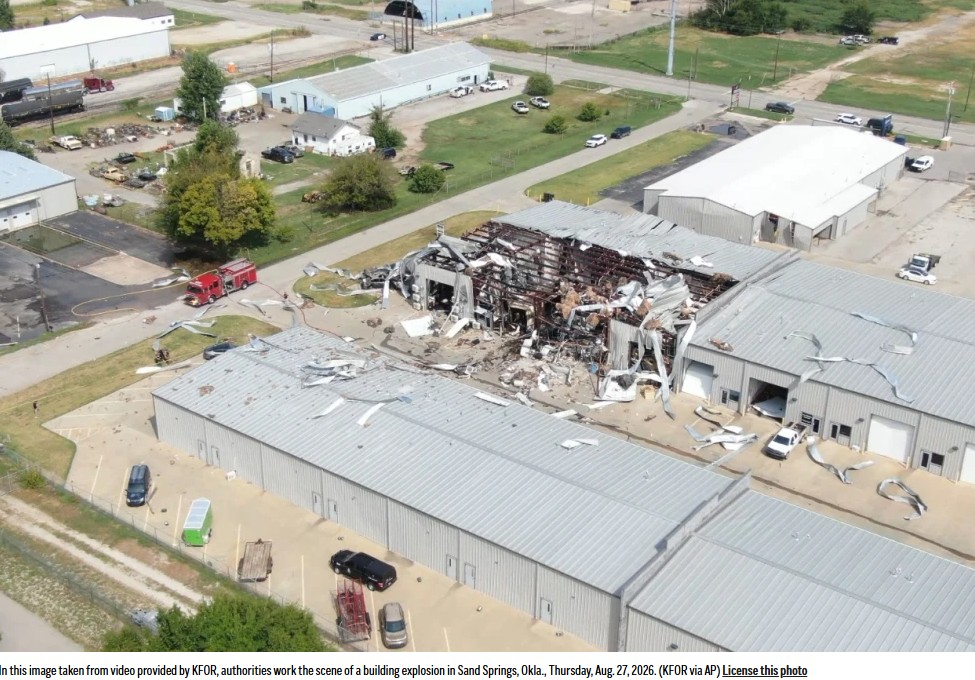
A deadly explosion at a cannabis facility in Sand Springs, Oklahoma, on August 27 has led to the owner being charged with two counts of first-degree murder after two of his employees died in the blast. Court documents and investigators identified a series of alleged safety, equipment, and compliance issues dating back to a January 2026 inspection.
The damage was catastrophic to Solos Extracts and the surrounding businesses in the community located near Tulsa. Solos Extracts operated a THC extraction facility that utilized flammable compressed gases like propane and butane.
According to investigators, and reported by Associated Press, one of the victims told paramedics that the indoor space lacked adequate ventilation and that the explosion ignited when he unplugged a piece of equipment.
According to investigators, the facility was operating with awaiting updated Oklahoma Marijuana Authority and Oklahoma Bureau of Narcotics licenses. The Fire Marshal had previously ordered the owner to disconnect extraction equipment immediately upon inspection in January of 2026.
Why are Butane and Propane Used in Cannabis Extraction?
In the production of cannabis extracts, the hydrocarbon cannabis extraction method can be used. Solvents like butane and liquid propane evaporate very easily, and dangerous fumes can collect within spaces. For proper cannabis extraction safety, they must be handled carefully.
Why Does Cannabis Extraction Require a C1D1 Space?
A Class I, Division 1 (C1D1) safety room is a hazardous location space designed and equipped for operations where ignitable concentrations of flammable gases or vapors may be present. A room or storage space that is C1D1 is considered “spark-proof” and ensures that electrical elements are properly modified to prevent sparks.
- explosion-proof housings – any electrical switches, lights, motors, mechanical fans, or any element that uses electricity OR could create a spark by some other method like friction, must be sealed within heavy-duty airtight casings in a C1Di- classified extraction room.
- control ignition sources – workers should not unplug machines. They are ideally either permanently wired into the walls, or strict training for workers should emphasize this rule.
- Only properly rated equipment – equipment specifically approved for a classified hazmat location can be used, but keep in mind that equipment like cell phones, printers, portable power tools, and more can be a risk.
CHART INSERT: Extraction Room Safety Features
How does Ventilation improve Cannabis Extraction Safety?
Having the gas pulled out of the space before it accumulates is essential to safety in cannabis operations. C1 D1 rooms also have special ventilation features to ensure safety.
- Continuous air exchanges – the ventilation system should change out the air in the space quickly and efficiently. It should be calculated specifically for the space, use, and gas within.
- Proper vent placement – depending on the gas used, in this case, butane and propane, the gas is heavier than air and sinks towards the floor. It is vital for the exhaust vents to be placed appropriately for the physical properties of the solvent being used.
- Continuous air exchanges – the ventilation system should change out the air in the space quickly and efficiently. It should be calculated specifically for the space, use, and gas within.
- Proper vent placement – depending on the gas used, in this case, butane and propane, the gas is heavier than air and sinks towards the floor. It is vital for the exhaust vents to be placed appropriately for the physical properties of the solvent being used.
How does Ventilation Improve Cannabis Extraction Safety?
Having the gas pulled out of the space before it accumulates is essential to safety in cannabis operations. C1 D1 rooms also have special ventilation features to ensure safety.
- Continuous air exchanges – the ventilation system should change out the air in the space quickly and efficiently. It should be calculated specifically for the space, use, and gas within.
- Proper vent placement – depending on the gas used, in this case, butane and propane, the gas is heavier than air and sinks towards the floor. It is vital for the exhaust vents to be placed appropriately for the physical properties of the solvent being used.
How do Gas Detectors Help Protect Cannabis Extraction Facilities?
Continuous gas detection can identify hazardous vapor concentrations before they reach dangerous levels. Often, the dangerous vapors build up slowly, and workers can completely unaware until it is too late. Being able to detect the gas and immediately implement an emergency response are both critical to cannabis facility safety.
- Gas detectors should be mounted where the gas will collect first. For example, to detect butane, it would be close to the floor. For methane, the placement would need to be higher since those fumes rise.
- Loud Alarms and Strobes – Detectors should be hooked up to flashing strobes and loud alarms to warn everyone in the facility of the danger of gas build-up.
What Should Cannabis Operators Look for in an Extraction Safety Building?
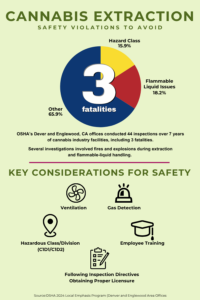
The Sand Springs explosion underscores why hydrocarbon extraction facilities require multiple layers of protection – from properly classified electrical systems and engineered ventilation, to gas detection, employee training, and regulatory compliance.
Building a Safer Cannabis Extraction Facility
There were many factors that led into this tragedy in Oklahoma, and it is difficult to understand how so many alleged safety violations could be ignored. This incident illustrates why cannabis extraction requires an engineered system of controls.
The investigation is ongoing. The facility owner is currently out on an $2 million bond. Those arrested are assumed innocent until proven guilty in a court of law. Note that hazardous-location classification, ventilation, gas detection and extraction-facility requirements depend on the process, materials, adopted codes and the local authority having jurisdiction.Gas
Planning a cannabis extraction facility or reviewing an existing operation?
Talk with our experienced Sales Engineers about C1D1-rated solutions designed around your extraction process, ventilation requirements, and hazardous location requirements. .At US Chemical Storage, we are in the business of safety and have made thousands of chemical safety buildings that handle risks like these every day.
References: