
Mooresville Explosion: Risks of Caustic Soda in Cleaning Operations
Mandy Marxen – US Chemical Storage
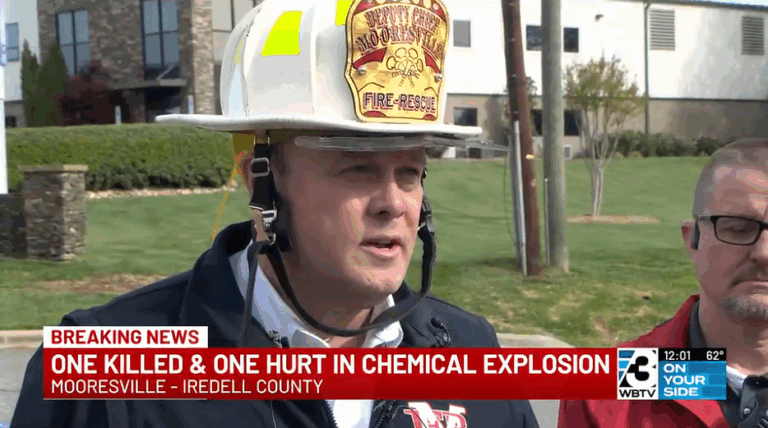
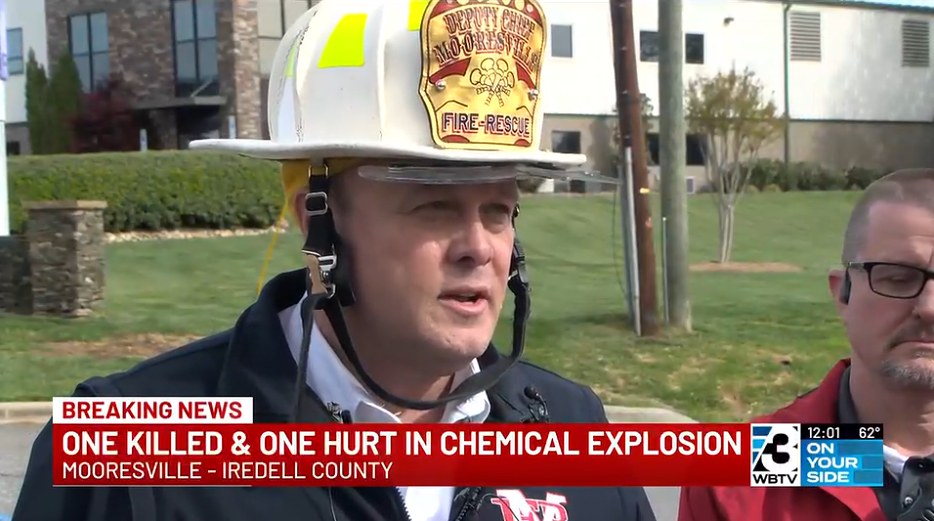
Image of Iredell Deputy Fire Chief speaking abou the Mooresville Explosion at Carolina Beverage. 4/7/2026. WBTV Channel 3 News Charlotte
A fatal tanker truck explosion in Mooresville, North Carolina on April 7, 2026, has drawn attention across the region, leaving one person dead and another injured as investigators work to determine the cause. Early reports from local news outlets indicated the possible presence of hazardous materials, including caustic soda, though officials have not yet confirmed a definitive cause.
No official statement has confirmed caustic soda as the cause, but it is reported that the truck was hauling sodium hydroxide, also known as caustic soda. Many industries rely on that same chemical daily and EHS professionals in the beverage and food manufacturing industry need to be aware of its inherent risks.
Why Caustic Soda is Widely Used in Beverage Manufacturing
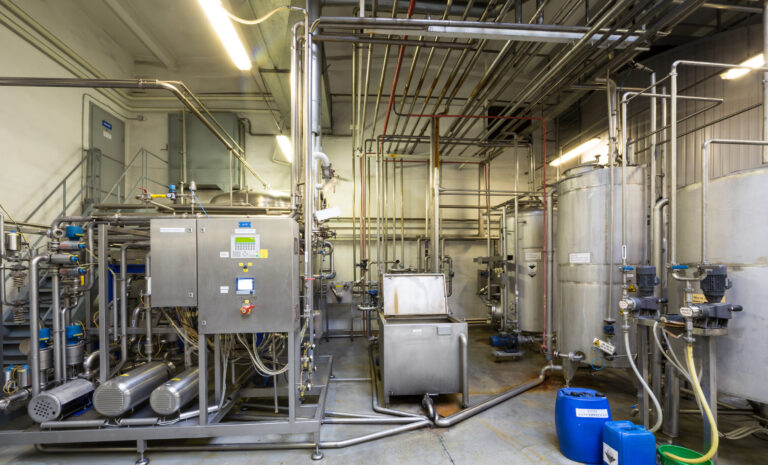
Caustic soda (called interchangeably as sodium hydroxide, soda lye, or sodium hydrate) plays a critical role in brewery and beverage production, particularly in sanitation processes. Clean-in-Place (CIP) systems depend on caustic solutions to remove organic residues such as sugars, proteins, and biofilms from tanks, piping, and processing equipment.
These cleaning cycles often involve circulating heated caustic solutions through enclosed systems, followed by rinses and sanitization steps. While very effective, these processes introduce chemical and thermal risks that must be carefully controlled.
How Caustic Soda Can Contribute to Dangerous Conditions
Caustic soda itself is not flammable, but under certain conditions it can contribute to incidents that escalate quickly, especially in confined or poorly controlled environments. is a highly corrosive, water-reactive, strong base (high pH) that causes damage when in contact with human tissues, including the eyes, skin, and respiratory system.
Sodium hydroxide is non-combustible, however, it is a strong caustic alkali that accelerates the burning of combustible materials. It is a white crystalline solid at room temperature and melts at 584 ˚F . When in contact with metals, like aluminum, it can produce hydrogen gas.
Key risk factors include:
- 1) Exothermic reactions when mixed improperly with water or other chemicals, generating significant heat
- 2) Incompatible chemical mixing, particularly with acids, which can result in violent reactions
- 3) Hydrogen gas formation when caustic soda reacts with metals like aluminum, creating a flammable atmosphere
- 4) Pressure buildup in sealed or inadequately vented systems during CIP cycles
- 5) Material degradation in storage tanks, piping, or containers not designed for corrosive substances
These risks are not theoretical—they exist in routine operations across breweries, beverage plants, and food processing facilities, that many EHS managers are aware of, but must be communicated across their manufacturing floor. Non-flammable does not mean it is safer than flammable or combustible chemicals, a common misconception.
FURTHER READING: Safe Sodium Hypochlorite (Bleach) Storage Solutions
What We Know – and What We Don’t – About the Mooresville Incident
While caustic soda has been referenced in early reporting, it is important to separate confirmed facts from speculation:
- The explosion resulted in one fatality and one injury
- The structure involved was largely destroyed
- Investigations are ongoing, with no confirmed root cause
- No agency has verified that caustic soda was responsible
This uncertainty is typical. Investigators must identify the fuel source, ignition source, and contributing environmental conditions before drawing conclusions. Until then, the incident should be viewed as a reminder of chemical risk—not a confirmed case study.
6 Safety Pathways Concerning Corrosives in Food & Beverage
Regardless of the final cause, the incident underscores several best practices for facilities handling caustic soda and similar chemicals. EHS managers in the food & beverage industry must be aware of:
- ◉ Store corrosive chemicals in code-compliant, ventilated environments
- ◉ Segregate incompatible substances to prevent unintended reactions
- ◉ Ensure proper venting and pressure controls in CIP and storage systems
- ◉ Use materials compatible with corrosive chemicals to prevent degradation
- ◉ Train personnel on chemical reactivity, not just handling procedures
- ◉ Conduct routine audits of chemical storage, transfer, and cleaning systems
Sodium Hydroxide + Metals = Hydrogen Gas
A well-documented hazard in industrial cleaning operations involves hydrogen gas generation when sodium hydroxide comes into contact with incompatible metals such as aluminum. In multiple documented industrial incidents reviewed by the U.S. Chemical Safety Board (CSB), hydrogen gas generation during caustic cleaning has led to explosions when proper material compatibility and ventilation controls were not in place.
In one representative case, a facility used a heated sodium hydroxide (NaOH) solution as part of a cleaning process in a system that included aluminum components. During the cleaning cycle, the caustic solution reacted with the aluminum, producing hydrogen gas:
2Al + 2NaOH + 6H₂O → 2NaAl(OH)₄ + 3H₂↑
Because the system was enclosed and not adequately vented, hydrogen gas accumulated inside the equipment. Hydrogen becomes flammable at concentrations as low as 4% in air (its lower explosive limit). When the system was later opened and exposed to an ignition source—likely static discharge or nearby equipment—the gas ignited, resulting in an explosion that caused significant equipment damage and serious worker injuries.
This type of incident highlights a critical but often overlooked risk in CIP and cleaning operations: material compatibility failures combined with inadequate ventilation can turn routine cleaning into an explosion hazard.
FURTHER READING: WHITEPAPER: Chemicals on the Edge - Bringing Danger Outside the Production Floor into Compliance
Caustic soda is a routine part of industrial cleaning, especially in beverage manufacturing, but its risks are often underestimated because it is not flammable in the traditional sense. Incidents like the Mooresville explosion highlight how quickly conditions can escalate when reactive chemicals, confined spaces, and process variables intersect.
At this stage, fire investigators and state agencies are still examining Carolina Brewing. As is typical with explosion events involving potential chemical exposure, the investigation may take many weeks or longer to determine whether the incident stemmed from a chemical reaction, gas accumulation, equipment failure, or another source entirely. The US Chemical Safety Board may investigate. U.S. Chemical Storage will update the story as details emerge.
For U.S. Chemical Storage customers and other industrial manufacturing operators, this is a reminder that safe corrosive chemical storage nd management are foundational controls—not optional upgrades—when working with sodium hydroxide and other high‑hazard industrial chemicals.
Protect Your Facility from Preventable Chemical Incidents:
Caustic soda is essential – but without the right storage, ventilation, and process controls, it can introduce serious risk. Ensure your facility is equipped to safely handle corrosive and reactive chemicals.
Download our whitepaper, “Chemicals on the Edge – Bringing Danger Outside the Production Floor into Compliance” for more information and CIP audit tools. If you need help sourcing safe storage solutions for your hazmat chemicals, fill out the form at right with your question, or reach out at 1-800-233-1480.
References:
WKRC CBS Local12 News: https://www.wbtv.com/2026/04/07/mooresville-explosion-leaves-one-dead-one-injured-heres-what-we-know/
OSHA Chemical Data Sheet – Sodium Hydroxide: https://www.osha.gov/chemicaldata/211
US Chemical Safety Board Case Study: https://www.csb.gov/csb-releases-investigative-update-into-chemical-eruption