
Safe Sodium Hypochlorite (Bleach) Storage Solutions
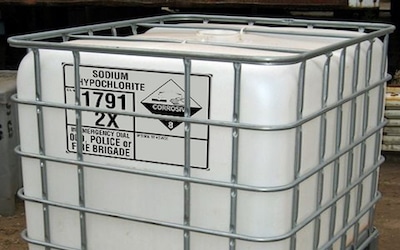
Sodium hypochlorite is a powerful oxidizing agent most commonly recognized as liquid bleach. In industrial, municipal, and manufacturing environments, proper sodium hypochlorite storage is critical to protecting employees, facilities, and the surrounding environment.
In its typical form, sodium hypochlorite is a clear to pale-yellow, water-based solution with a strong chlorine-like odor. While widely used for disinfection and sanitation, it presents significant chemical, health, and environmental hazards if improperly stored. For manufacturing facilities, water utilities, and food processors, compliant bleach storage is not optional—it is a safety and regulatory necessity.
Safe Sodium Hypochlorite Storage Requirements
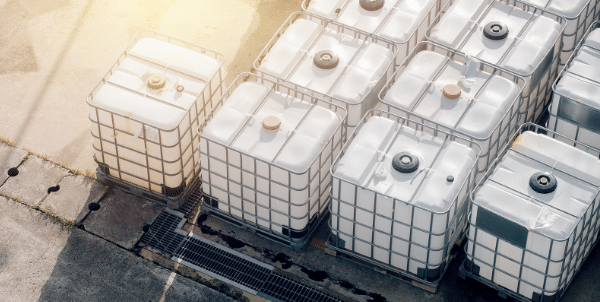
Proper sodium hypochlorite storage helps prevent chemical decomposition, over-pressurization of containers, and dangerous reactions with incompatible materials.
Key safe storage requirements for sodium hypochlorite include:
Temperature control: Sodium hypochlorite should be stored below 68°F (20°C). Elevated temperatures accelerate decomposition, reduce product strength, and increase oxygen off-gassing.
Sealed containers: Store bleach in tightly sealed, air-tight containers or tanks to minimize oxygen release and pressure buildup.
Dedicated storage areas: Sodium hypochlorite must be isolated from incompatible chemicals such as acids, reducing agents, organic materials, oils, solvents, alcohols, and hydrocarbons.
Secondary containment: Built-in containment sumps are essential to capture leaks or spills and prevent releases to soil, drains, or waterways.
Mechanical ventilation: Ventilation helps manage vapors and corrosive atmospheres while maintaining safe indoor air quality.
Protection from sunlight: Direct sunlight and heat exposure increase decomposition and container stress.
Climate-controlled chemical storage buildings from U.S. Chemical Storage are engineered to maintain sodium hypochlorite within its recommended temperature range and include integrated spill containment and ventilation options designed specifically for oxidizing chemicals like bleach.
Climate-controlled chemical storage buildings from U.S. Chemical Storage are engineered to maintain sodium hypochlorite within its recommended temperature range and include integrated spill containment and ventilation options designed specifically for oxidizing chemicals like bleach.
What Is Sodium Hypochlorite Used For?
Sodium hypochlorite is valued for its disinfecting, sanitizing, and bleaching properties across many industries:
Healthcare and medical applications: Used as an antiseptic for wound irrigation and to dissolve devitalized tissue under professional supervision.
Potable water treatment: Widely used by water utilities to disinfect drinking water and control microbial contamination.
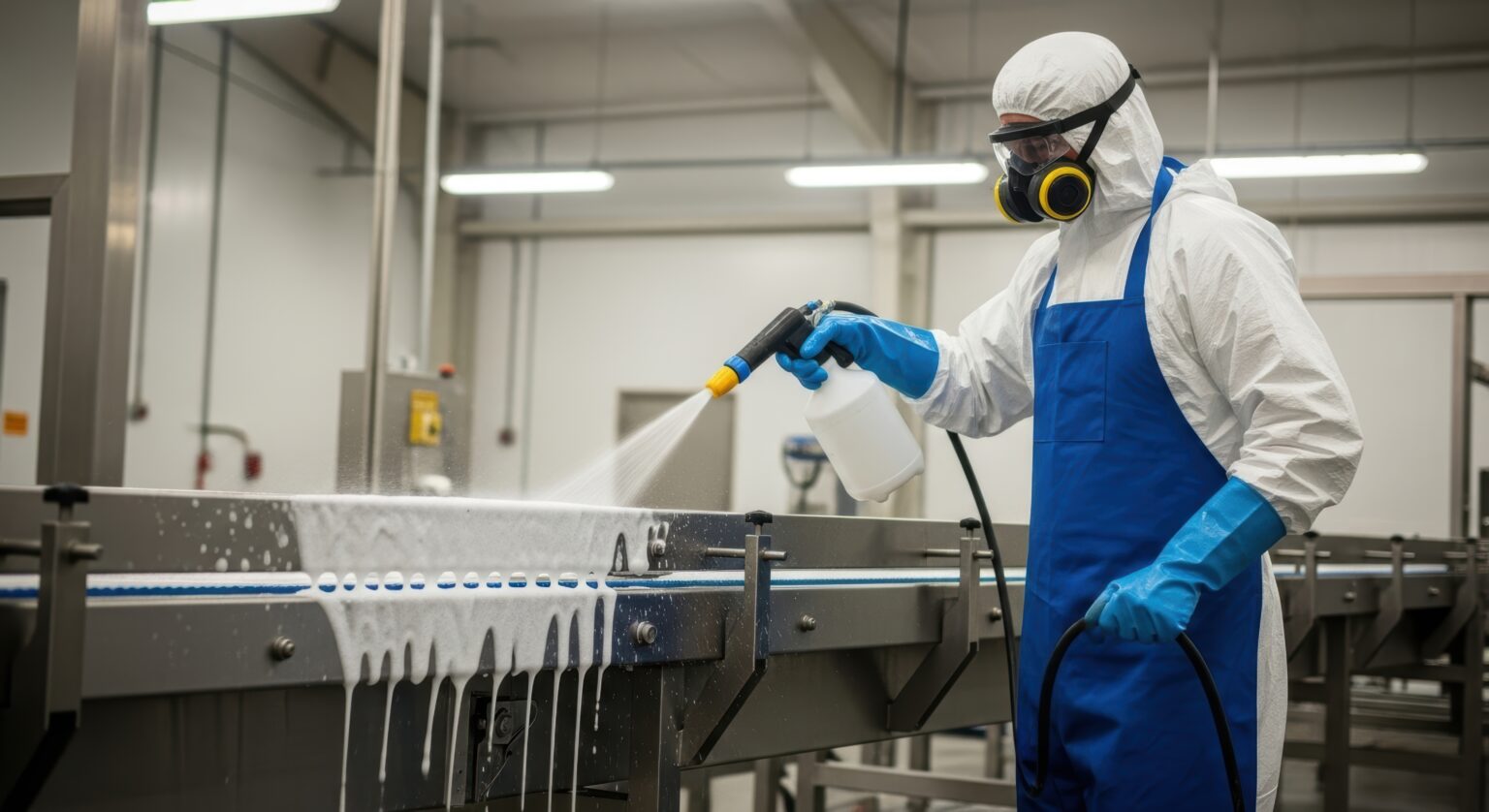
Food and beverage processing: Applied to sanitize food-contact surfaces, tanks, and processing equipment.
Industrial water systems: Used as a biocide in cooling towers and process water systems to control algae, slime, and biofouling.
Household and institutional cleaning: Household bleach typically contains 3–8% sodium hypochlorite and is considered household hazardous waste.
Hazards and Incompatibilities of Sodium Hypochlorite
Sodium hypochlorite presents several serious risks that must be addressed through proper storage and handling:
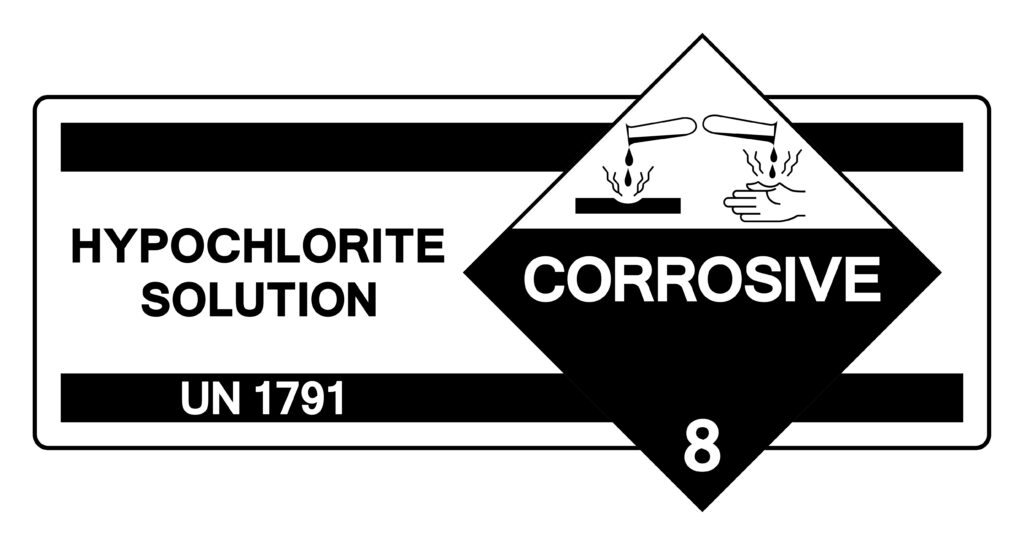
Corrosive effects: Direct contact can cause severe skin and eye burns; ingestion can be life-threatening.
Chlorine gas release: Mixing bleach with acids or acidic cleaners releases chlorine gas, which is highly toxic to the lungs, eyes, and skin.
Oxidizing reactions: As a strong oxidizer, sodium hypochlorite can generate heat when contacting reducing agents, increasing fire or explosion risk.
Dangerous chemical combinations: Contact with organic matter, oils, hydrocarbons, ammonia, or alcohols can lead to violent or explosive reactions.
Pressure buildup: Slow oxygen venting during storage can increase internal container pressure, potentially causing container rupture and spills.
Environmental toxicity: Sodium hypochlorite is extremely toxic to aquatic life, making spill prevention and containment critical.
Because bleach can act as an accelerant in a fire, improper storage can also create dangerous conditions for emergency responders.
Facilities storing sodium hypochlorite may be subject to muliptle regulatory standards, including, but not limited to:
NSF/ANSI 60 – Requirements for chemicals used in drinking-water treatment. Utilities using sodium hypochlorite for potable water disinfection should specify NSF/ANSI 60‑certified product and verify that bulk storage and feed systems meet applicable drinking water regulations.
CERCLA / EPCRA / Clean Air Act (CAA) – Hazardous substance reporting and release prevention requirements. Because sodium hypochlorite appears in EPA’s Consolidated ‘List of Lists’ with a 100‑pound CERCLA reportable quantity, facilities should review EPCRA Sections 304, 311, and 312 and coordinate with their environmental compliance team to confirm release‑reporting and Tier II inventory obligations.
Depending on application and quantity, facilities may also need to comply with OSHA, fire code, environmental, and local Authority Having Jurisdiction (AHJ) requirements

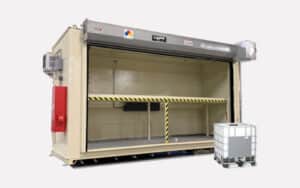
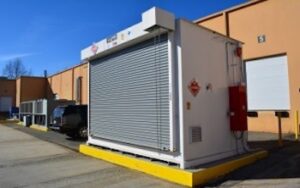
US Chemical Storage Buildings are designed to help end users:
Maintain segregation and secondary containment for sodium hypochlorite in line with oxidizer storage guidance (NFPA 430/IFC)
Support OSHA compliance by providing engineered ventilastion, corrosion-resistant construction, and controlled access for safe handling.
Facilitate environmental compliance by integrating secondary containment sumps and spill control features that help prevent releases above CERCLA/EPCRA thresholds.
Sodium Hypochlorite Storage Buildings from U.S. Chemical Storage
U.S. Chemical Storage offers prefabricated chemical storage buildings designed to help facilities safely and compliantly store sodium hypochlorite and other oxidizing chemicals. These buildings can be configured with:
Climate control systems
Mechanical ventilation
Corrosion-resistant construction
Integrated secondary containment sumps
Custom sizing for drums, totes, or bulk containers
For manufacturing and utility facilities, purpose-built bleach storage buildings reduce compliance risk, improve safety, and protect both people and property.
Contact U.S. Chemical Storage to discuss site-specific sodium hypochlorite storage requirements, building configurations, and compliance considerations for your facility.
References
US EPA – Water Supply Chain Profile: Sodium Hypochloite
New Jersey Department of Health – Sodium Hypochlorite Hazardous Substance Fact Sheet
Stanford University EH&S – Sodium Hypochlorite Safety Fact Sheet
US EPA Decontamination and Agent Info – Sodium Hypochlorite