
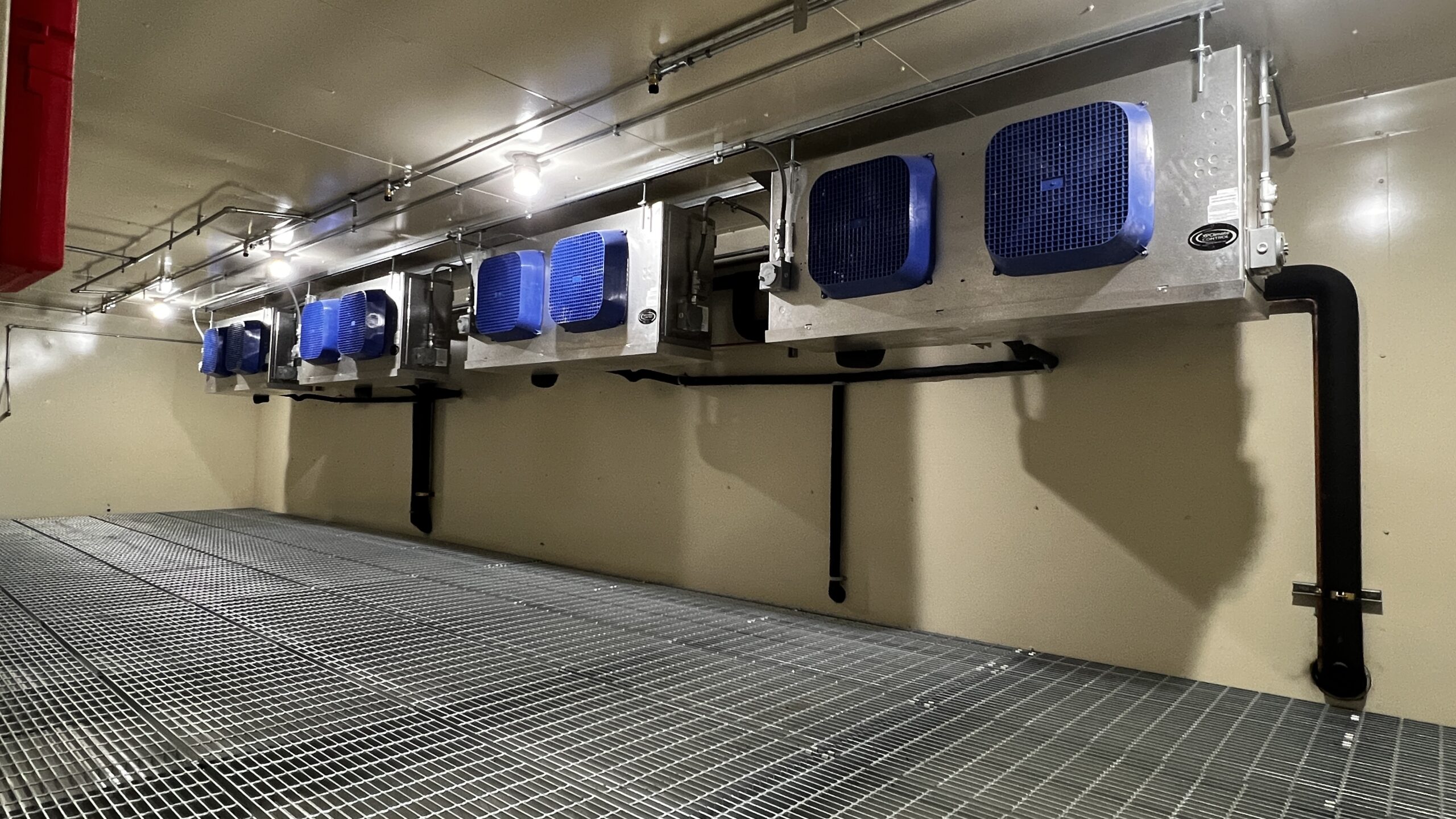
Freezers and Cold Storage Buildings
U.S. Chemical Storage provides freezers that hold below freezing, below zero, and hot gas injection freezers to keep organic peroxides and other chemicals stable and secure.
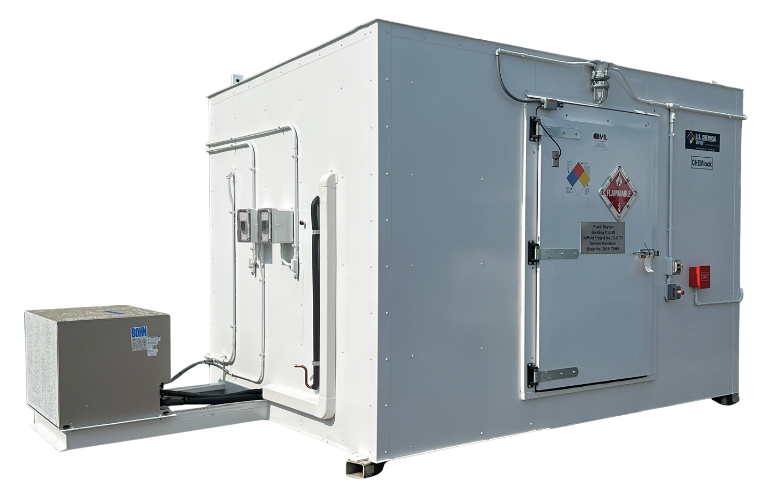
ChemLocTM freezer storage building
Cold Storage and Deep Freeze Storage Buildings
Deliver safer, compliant, temperature-correct storage for oxidizers and bio-actives in drums and IBC totes. so Facilities can protect product quality and reduce regulatory risk without sacrificing uptime or floor space utilizing the right freezer for their unique applications.
If your plant relies on peracetic acid, hydrogen peroxide, cultures, enzymes, organic peroxides, or temperature‑sensitive resins, improvised coolers and general‑purpose rooms are not enough.
The right storage solution means more uptime per shift, more energy-efficient defrosts, better yield and less rework for your business.
Move those high‑value, high‑hazard chemicals into cold room and freezer‑class buildings engineered with integrated sumps, hot‑gas‑ready refrigeration, and hazardous‑chemical safety engineered from the ground up.
Fill out the form at right to talk with the team about sizing and configuring a low‑temperature chemical building for your exact mix of drums, totes, and ingredients.
Cold Room and Freezer Storage Building Benefits
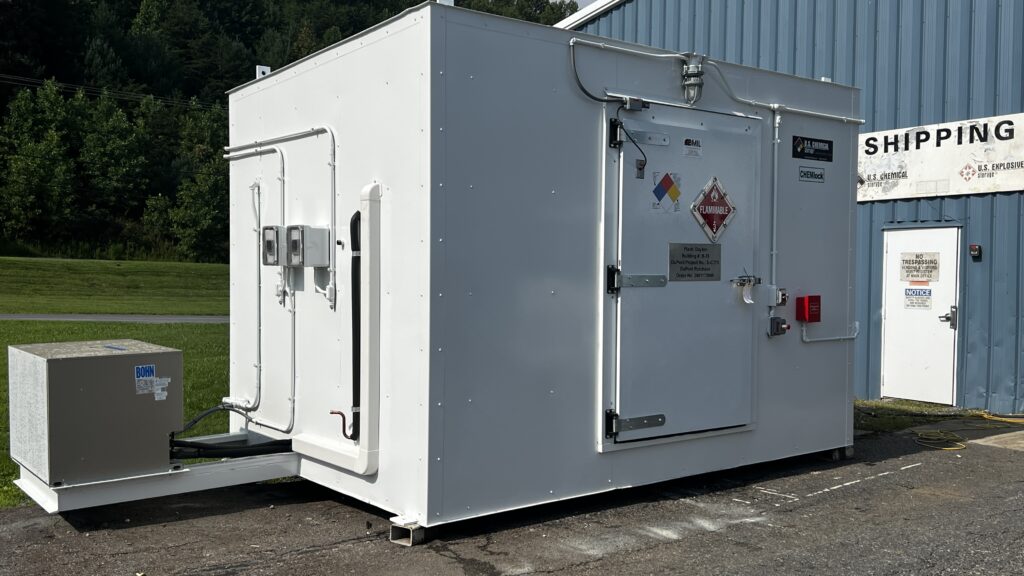
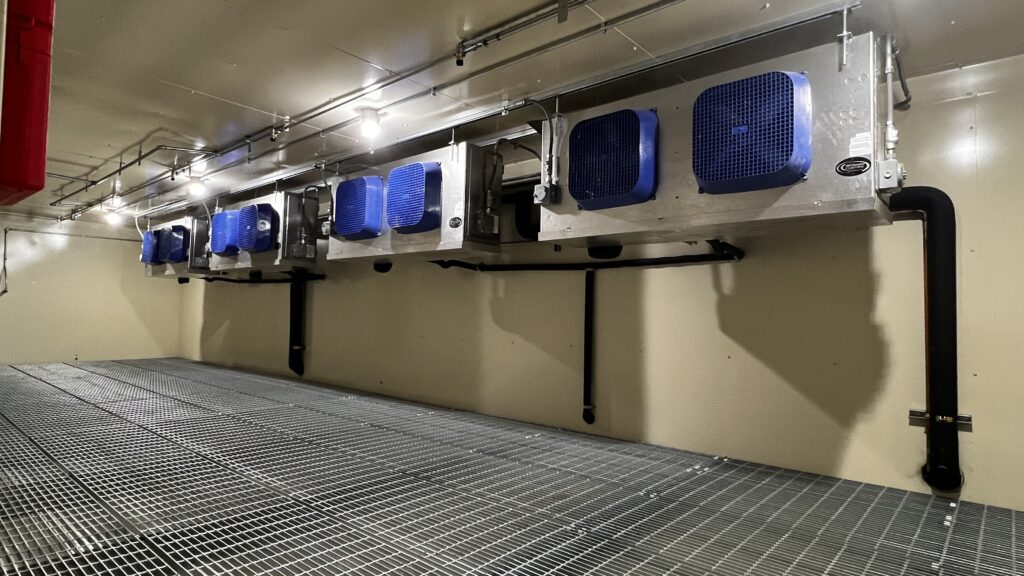
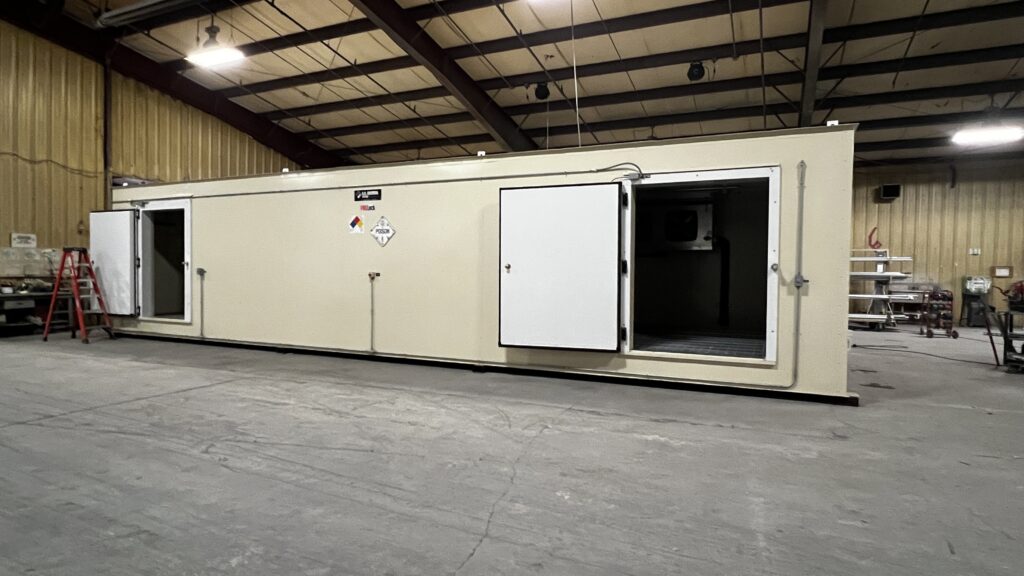
Our Solution: Code-Compliant Cold & Freezer Chemical Buildings
Purpose-built, prefabricated chemical storage buildings that combine:
- Dry Refrigerated and freezer-class temp control
- Configurable for chilled (e.g., 35–45 °F) or sub‑zero (0–5 °F or below) storage to match label requirements for PAA, hydrogen peroxide, frozen cultures, and enzyme concentrates.
- Designed for uniform temperature across the room, avoiding warm spots that can degrade sensitive products.
- Hot-gas-equipped freezer systems
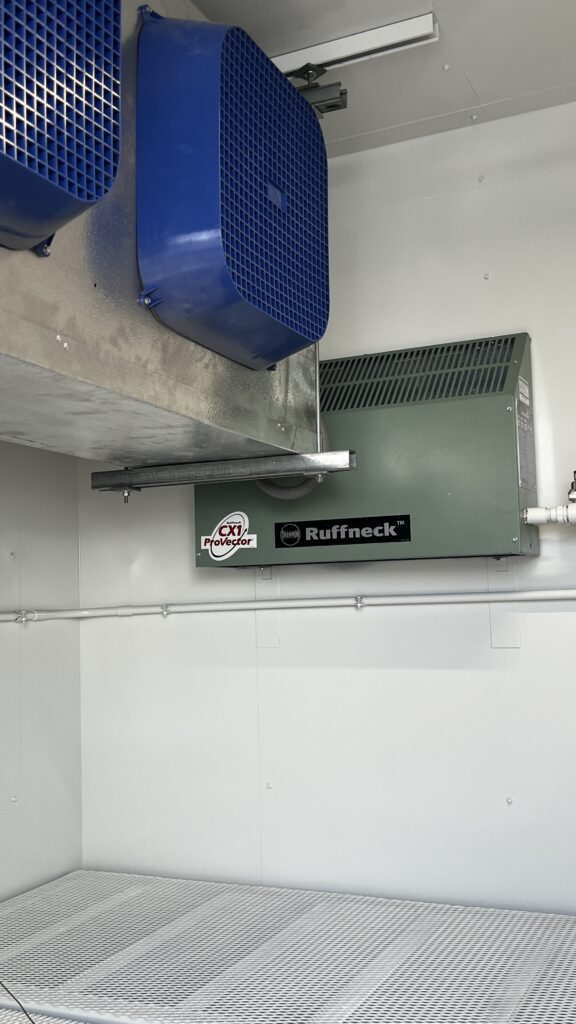
- Industrial refrigeration with hot‑gas defrost and air distribution engineered for single‑digit and sub‑zero operation, similar to low‑temperature food freezers, but configured for drums and totes rather than open food.
- Hot‑gas defrost reduces ice buildup on coils, keeping the room at spec temperature while minimizing downtime and electrical defrost load.
- Integrated secondary containment & spill control
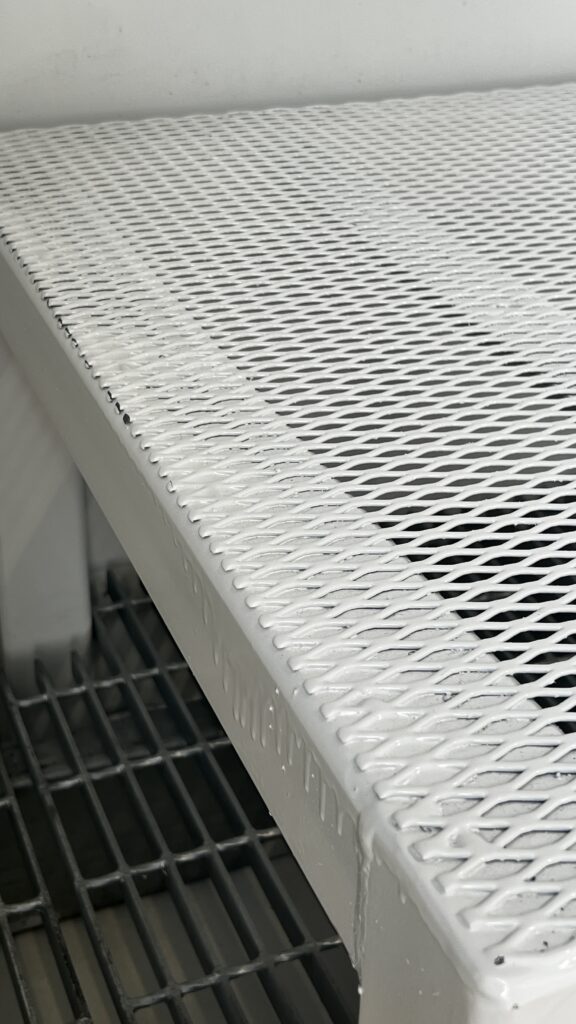
- Built‑in sumps sized to meet common containment thresholds for oxidizers and corrosives stored in drums and IBCs.
- Perimeter shelf or raised rack system that keeps containers off the floor while preserving sump volume, simplifying inspections and cleanup.
- Code‑compliant hazardous‑chemical construction
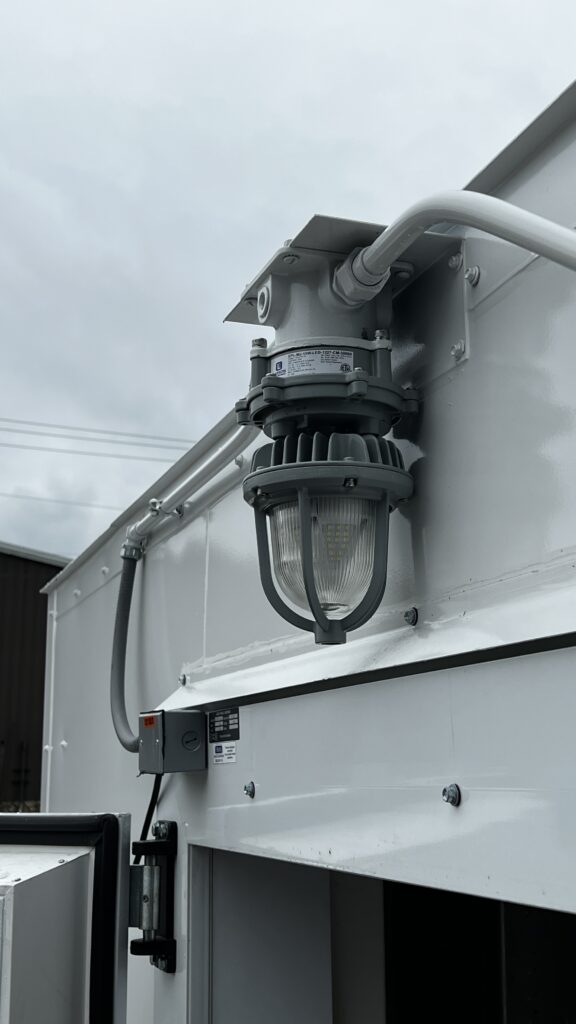
- Construction and layout intended to align with widely used fire, environmental, and worker‑safety codes for oxidizers and corrosives (ventilation, separation, secondary containment, fire‑rated construction where needed).
- Clear segregation of chemical storage from food production areas, supporting audits, FSMA/HACCP plans, and corporate EHS standards.
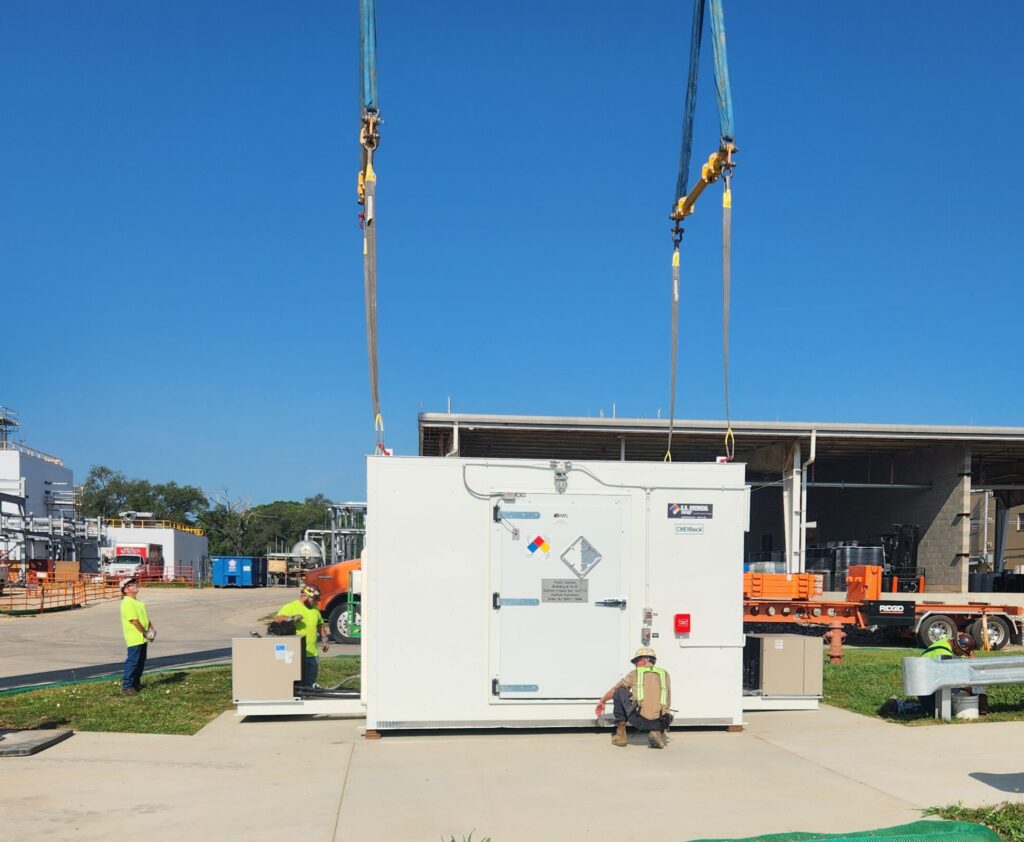
More Benefits
- Configurable temperature bands from standard refigeration ( 35–45 °F) down to sub-zero (0–5 °F and below) to match real SDS and label requirements
- Built-in sumps sized for drums and IBC totes
- Perimeter shelving and racking designed so every container receives stable temperatures
- Code-aligned hazardous chemical design
- Clear segregation between hazardous chemical storage and food production or occupancy spaces
- Fire-rated construction options engineeered for commonly applied standards for oxidizers and flammables.
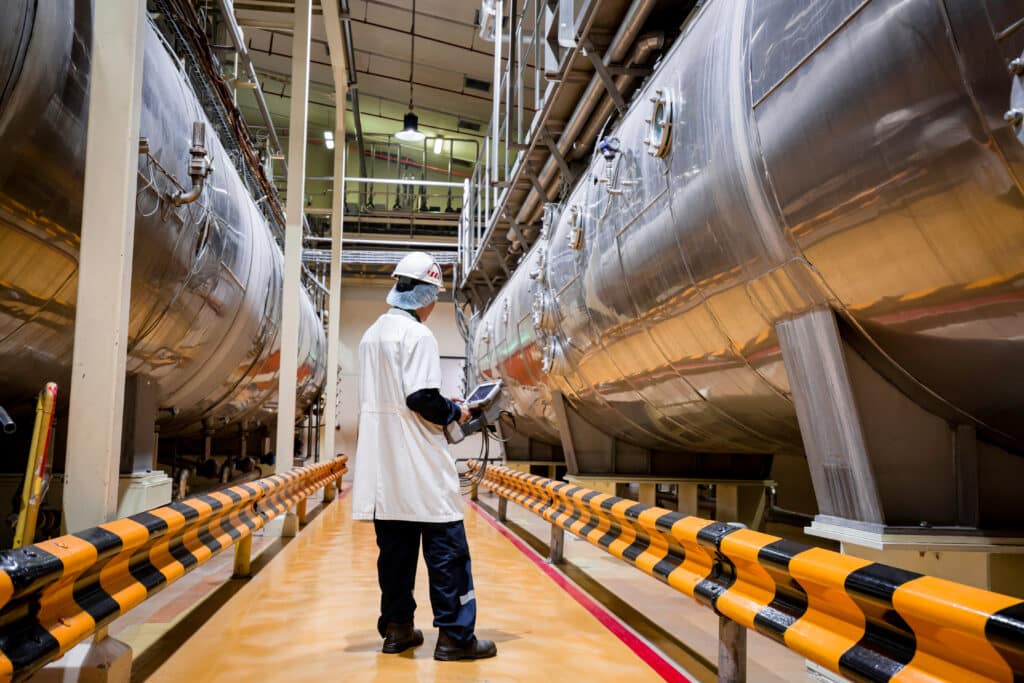
Common Applications
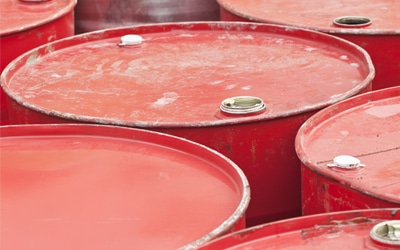
- FOOD INDUSTRY
- PAA & PAA-based blends
- Food-grade hydrogen peroxide
- Frozen & chilled cultures
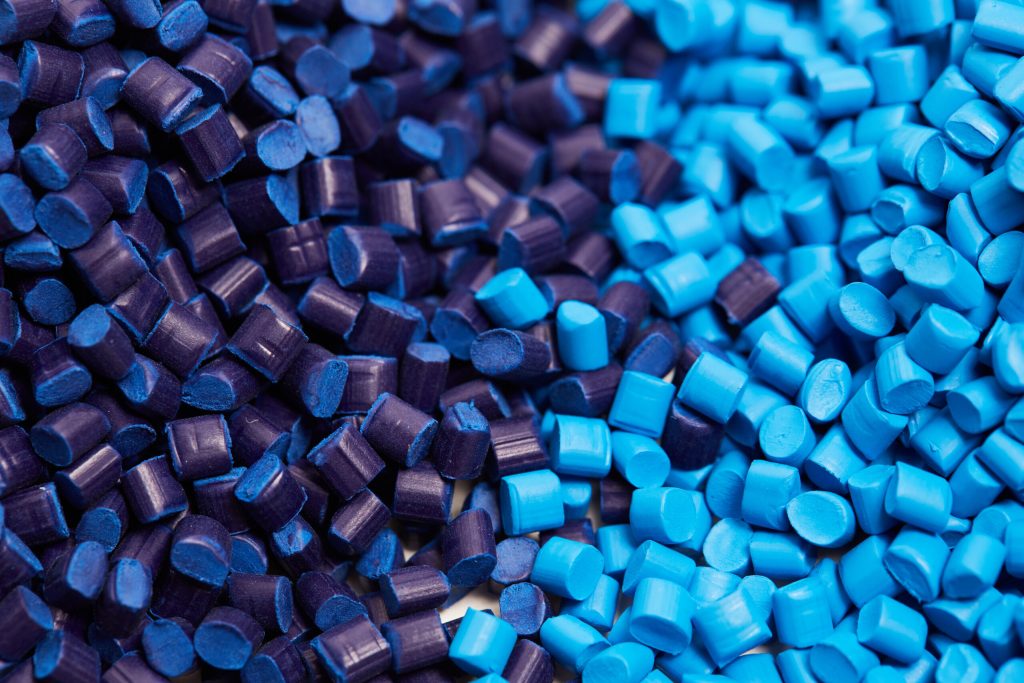
- RESIN & COATINGS
- Organic peroxides & initiators
- Temperature-sensitve liquid resins & additives
- Cross-linkers & specialty additives
- CHEMICAL DISTRIBUTORS
- Mixed loads of PAA
- Organic peroxides
- Oxidizers
Frequently Asked Questions
Many sanitizers, bio‑actives, initiators, and resins have label or SDS requirements for refrigerated or sub‑zero storage to maintain stability, potency, and safety. A freezer‑rated chemical building lets you hit those temperature specs, provide secondary containment, and meet fire/environmental codes in one engineered package, rather than improvising with standard coolers and scattered storage.
In food and beverage, examples include peracetic acid and hydrogen peroxide sanitizers (for CIP, aseptic packaging, and produce/meat washes), frozen cultures and probiotics, and temperature‑sensitive enzyme preparations. In resins and composites, the key candidates are organic peroxide initiators and certain specialty resins or additives that must be kept below specific temperatures to avoid decomposition or premature curing.
Hot‑gas defrost freezers circulate hot compressor gas through evaporator coils to melt ice quickly, which is more efficient than electric defrost and reduces downtime. For chemical storage, that means more stable temperatures for drums and totes, fewer “temperature excursions” that could upset sensitive chemistries, and less manual defrost intervention around hazardous materials.
Secondary containment sumps are there to capture leaks or spills from drums and IBCs so chemicals cannot reach soil, drains, or work areas. Perimeter shelving or raised racking keeps containers above the floor while still draining into the sump, preserves containment volume, and leaves clear aisle space for safe handling, inspections, and emergency response inside a tight cold‑room footprint.
Check the product’s SDS and technical data sheet for phrases like “store refrigerated,” “store at 2–8 °C,” “store frozen,” or explicit maximum storage temperatures. Then look at its hazard class (oxidizer, corrosive, organic peroxide, etc.) and container size; if it both needs tight temperature control and poses spill or reactivity risk in drum/IBC quantities, it is a strong candidate for a cold or freezer‑rated, sump‑equipped chemical building.
Request a Quote
RELATED PRODUCTS
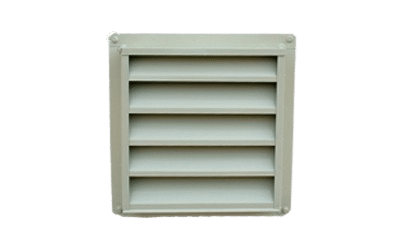
Ventilation Options for Your Storage Building
Proper chemical storage ventilation within your chemical storage building can maximize worker and environmental safety.

Partition Walls
Segregating chemicals with partition walls allows for the storage of multiple chemicals inside the same chemical storage building. View >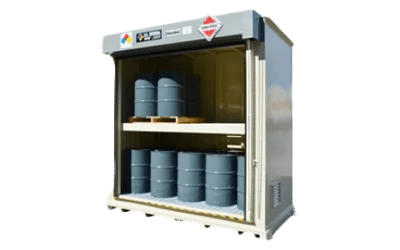
ChemLoc™ Chemical Storage Buildings
These chemical storage units have countless applications and accessories that can be custom engineered to fit your specific needs.
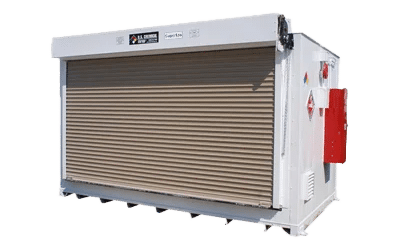
SuperLoc™ Flammable Storage Buildings
4-hour flammable storage buildings ensure compliance while improving efficiency and allow for flammable storage located within 10 feet from and even inside your facility. View >
YOUR PARTNER IN THE PROCESS. EXPERIENCE YOU CAN TRUST.
We deliver the precise building solution with the speed, security, and high quality that you demand.